



Voices Of November: 3 Stories Of Courage Under Nazi Occupation
November carries difficult dates in Krakow's wartime history. On November 6, 1939, German occupiers turned a university meeting into a mass arrest. Two years later, on November 11, 1941, they used Polish Independence Day to begin executions at the Death Wall in Auschwitz. Between those dates lies another Krakow story: a pharmacist who remained inside the Krakow Ghetto after nearly every other non-Jewish resident had been forced to leave. Tadeusz Pankiewicz did not carry a weapon or lead a public protest. His pharmacy became a place where medicine, information, food, documents and people could pass through a sealed district. These stories should not be read as easy tales of heroism. They describe a city under Nazi German occupation, where ordinary work, study, medicine and remembrance could become acts of resistance, survival or witness.
| Story | Place today | Key date |
|---|---|---|
| Tadeusz Pankiewicz and the Eagle Pharmacy | Eagle Pharmacy Museum, Bohaterow Getta Square | Krakow Ghetto existed from 1941 to 1943 |
| Sonderaktion Krakau | Collegium Novum, Jagiellonian University | November 6, 1939 |
| The first execution at the Death Wall | Block 11, Auschwitz I Memorial | November 11, 1941 |

The pharmacy inside the walls
Before the war, the Eagle Pharmacy stood on Zgody Square in Podgorze, a normal part of a mixed Krakow neighbourhood. Tadeusz Pankiewicz had run the family business since 1934. Jewish and Polish residents came in for prescriptions, remedies and everyday advice. Nothing about the pharmacy's address suggested that, within a few years, it would become one of the most important surviving witnesses to the Krakow Ghetto. In March 1941, the German occupiers created a closed ghetto in Podgorze. Its boundaries enclosed the pharmacy. Poles were ordered to leave the district, but Pankiewicz was allowed to remain and keep working. That decision placed him in an extraordinary position: he became the only Pole allowed to live permanently inside the ghetto.
The pharmacy was still a pharmacy. People needed medicine, bandages and practical help. Yet its role quickly expanded because it was one of the few places where news could travel across the ghetto boundary. Jewish residents came there to meet, exchange information and maintain contact with the outside world. Pankiewicz and his assistants, Irena Drozdzikowska, Aurelia Danek and Helena Krywaniuk, carried messages and smuggled food into the ghetto. During the deportations of 1942, the staff gave free dressings and medicine to injured people. The rooms and storage spaces offered temporary hiding places. The pharmacy also supplied hair dye, used by people trying to look younger or healthier, and Luminal, a sedative used to keep children quiet while they hid or were smuggled out in luggage. These were small items in ordinary-looking bottles and boxes, but within the ghetto they could affect whether someone was noticed, selected or able to survive another day.
Pankiewicz later wrote that he and his staff had simply done what duty required. The scale of the risk is clearer in retrospect. They lived and worked inside a district built for isolation, deportation and destruction. Their work did not stop the liquidation of the Krakow Ghetto, but it created moments of help, shelter and connection in a place designed to deny all three. After the war, Pankiewicz recorded what he had witnessed in his memoir, The Krakow Ghetto Pharmacy. His testimony mattered because many of the people he described had been murdered and entire families had disappeared. In 1983, Yad Vashem recognised him as Righteous Among the Nations. Today, the former pharmacy at Bohaterow Getta Square 18 is part of the Museum of Krakow and preserves the story of the ghetto through reconstructed rooms, documents, photographs and survivor testimony.
Sonderaktion Krakau: When a lecture became a trap
On November 6, 1939, Collegium Novum was still one of the most recognisable buildings in Krakow. It had been the administrative heart of the Jagiellonian University since the 19th century, a place associated with lectures, examinations and academic ceremony. Less than two months after Germany invaded Poland, the building became the setting for one of the occupation's most significant attacks on Polish intellectual life. The university rector, Professor Tadeusz Lehr-Splawinski, had been ordered by SS-Sturmbannfuhrer Bruno Muller to convene a meeting of university lecturers. The stated subject was the German position on science and higher education. Professors, assistants and other members of the academic community gathered in Collegium Novum expecting an official address. Instead, after a short speech, Muller announced their arrest.
A total of 183 people were detained. Most were connected with the Jagiellonian University, but those seized also included staff from the Academy of Mining and the Krakow Academy of Commerce, as well as people who happened to be in or near the building. The arrests formed part of the wider German policy of eliminating Polish intellectual, cultural and civic leadership. The prisoners were first taken to Montelupich prison in Krakow, then to barracks on Mazowiecka Street. Within days, 172 of them were transported through Wroclaw to Sachsenhausen concentration camp. The age and standing of the prisoners offered no protection. Professors who had spent their lives teaching, researching and writing were suddenly subject to the same machinery of imprisonment, hunger, humiliation and forced labour as other victims of the Nazi camp system.
The arrests changed how Krakow understood the occupation. In the first weeks after the invasion, some people had hoped that university life might be restricted but could somehow continue. Sonderaktion Krakau made clear that education itself was being treated as a threat. A university was not merely a building or a collection of lectures. It was a place where Polish language, research, memory and independent thought could continue. International protests from academic communities and public figures eventually contributed to the release of many prisoners in 1940 and 1941. The story did not end neatly with those releases. At least 25 of those arrested died in concentration camps or after returning to Krakow because of the conditions they had endured.
Collegium Novum remains a working university building. Passing it on Golebia Street, it is easy to see students moving between classes and visitors taking photographs of its Gothic Revival facade. That ordinary academic life gives the story its force. On November 6, 1939, the occupiers understood exactly what they were attacking: the people who carried Krakow's intellectual life forward. For a detailed account of the arrests, imprisonment and deportation, see the Institute of National Remembrance's English-language article on
the victims of Sonderaktion Krakau.

The Death Wall at Auschwitz
November 11 had been Polish Independence Day since 1918, marking the moment when Poland returned to the map of Europe after 123 years of partition. Under German occupation, the holiday could no longer be publicly celebrated. For the wider history behind the date and its place in Polish memory, read our guide to Polish Independence Day on November 11.
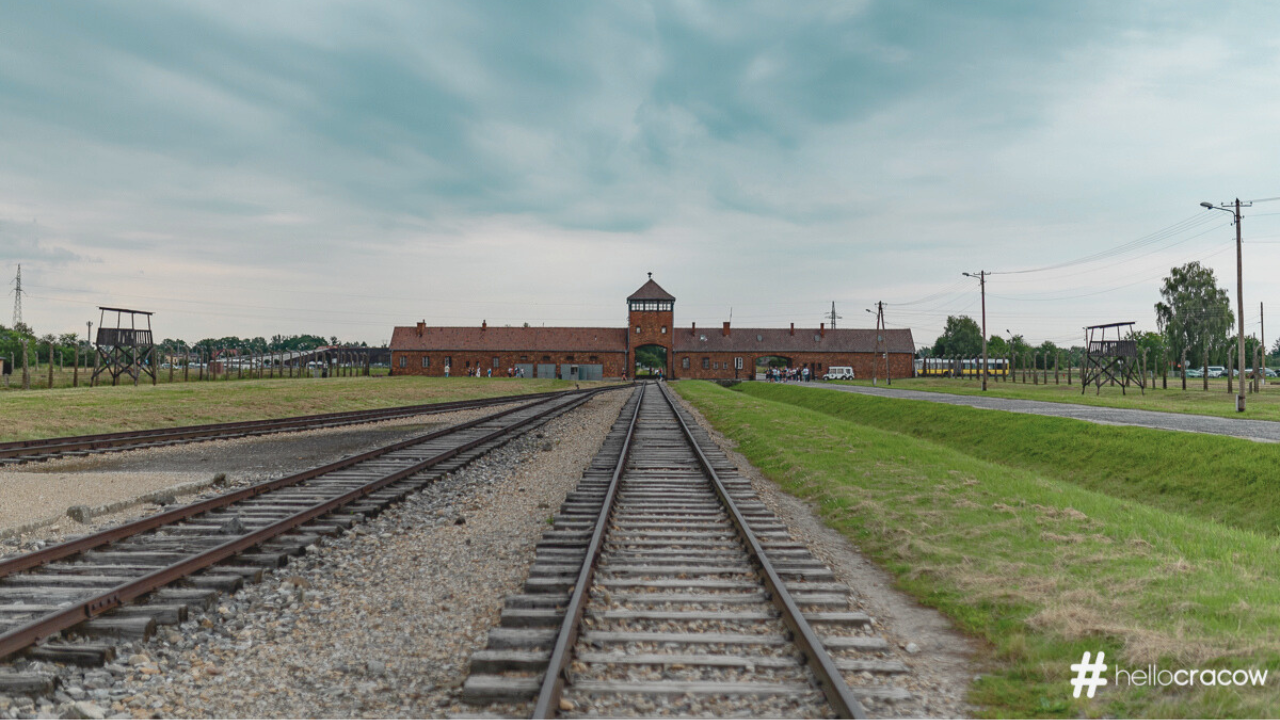
Two years after Sonderaktion Krakau, the SS deliberately chose November 11, 1941, for the first execution at the newly built Death Wall in the courtyard of Block 11 at Auschwitz I. The symbolism was intentional: a day associated with restored independence became a day of terror directed at prisoners, most of them Polish political prisoners. Seventy-six prisoners were killed on November 11, 1941: 49 selected from camp blocks and 27 who had already been imprisoned in the camp jail. Seventy-five were Polish and one was German. They were shot in the enclosed courtyard between Blocks 10 and 11, where the Death Wall had been constructed to hide executions from the wider camp.
The location matters because Auschwitz I can appear orderly to a first-time visitor. Brick barracks line straight paths. Trees and grass soften parts of the former camp. The courtyard of Block 11 interrupts that order. High walls close it off from the surrounding blocks, making clear that executions were planned to happen out of sight. From autumn 1941 until autumn 1943, the Death Wall became the main site of executions at Auschwitz I. Prisoners were brought there from Block 11 and shot by SS men with small-calibre weapons. Thousands of people were murdered at the wall during this period. The original wall was dismantled in 1943, but it was reconstructed after the war as part of the Memorial.
The story of November 11, 1941, is difficult precisely because there is no uplifting resolution. It is not a story about victory. It is a record of deliberate Nazi terror, carried out on a date chosen to humiliate a nation whose independence had been violently destroyed again. Remembering the exact date, the number of victims and the reason the date was chosen protects the event from becoming an abstract sentence in a history book. The Auschwitz-Birkenau Memorial's
history calendar for 1941 confirms the first execution of 76 prisoners at the Death Wall. Its educational material on
Block 11 and the Death Wall explains the deliberate choice of November 11 and the breakdown of those murdered that day.

Visiting these places with care
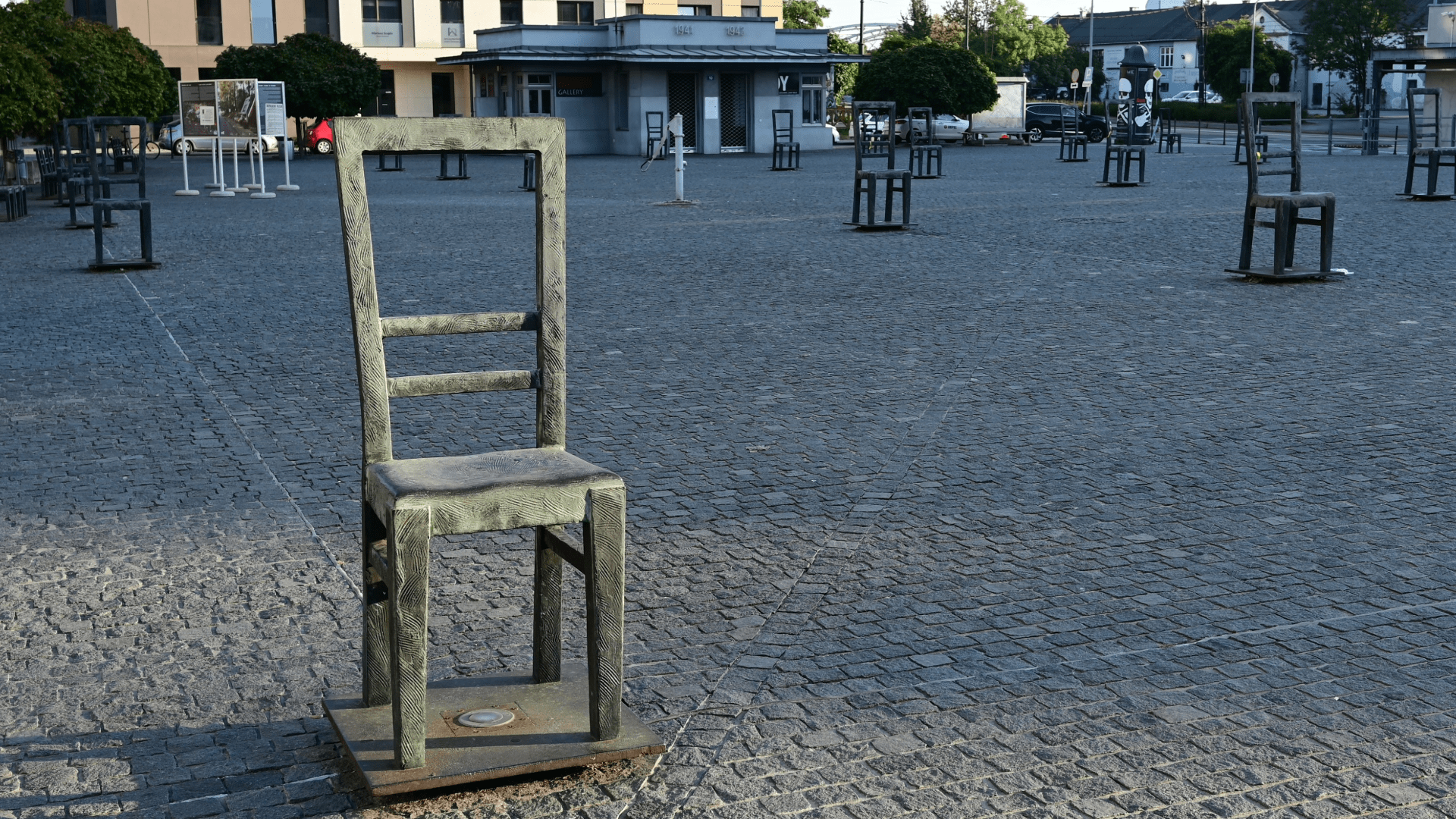
These three locations ask for different kinds of attention. The Eagle Pharmacy is a museum within the former Krakow Ghetto. Give yourself time to read the testimony and understand the square outside, now called Bohaterow Getta Square. The rows of empty chairs in the square are a memorial to the people forced to gather there during deportations. Collegium Novum is still part of the Jagiellonian University. It is appropriate to pause outside, notice the memorials and remember the events of November 6, but it should not be treated as a dark-tourism backdrop. Students and staff continue to use the building every day.
At Auschwitz-Birkenau, the Death Wall is part of a Memorial and former concentration and extermination camp. Visitors should speak quietly, follow the Museum's rules and avoid turning the space into a setting for posed photographs. If you are planning a visit from Krakow, our Respectful Traveler's Guide to Visiting Auschwitz offers practical guidance on preparation, clothing, photography and the emotional weight of the day..
Three places, one responsibility
The Eagle Pharmacy, Collegium Novum and the Death Wall are separated by neighbourhoods, roads and distance. They are also connected by one question: what happens when an occupying power tries to control who may live freely, who may study, who may speak and who may be remembered?
At the pharmacy, courage took the form of staying, carrying messages and using ordinary medical supplies to help people survive. At the university, the arrests showed how seriously the occupiers feared education and independent thought. At Auschwitz, the Death Wall remains a warning of where a system built on persecution, imprisonment and dehumanisation can lead.
November is a useful moment to remember these stories because their dates remain fixed in the calendar. Their meaning depends on how carefully they are told.