



All Saints’ Day In Krakow: Rakowicki Cemetery, Traditions And Visitor Etiquette
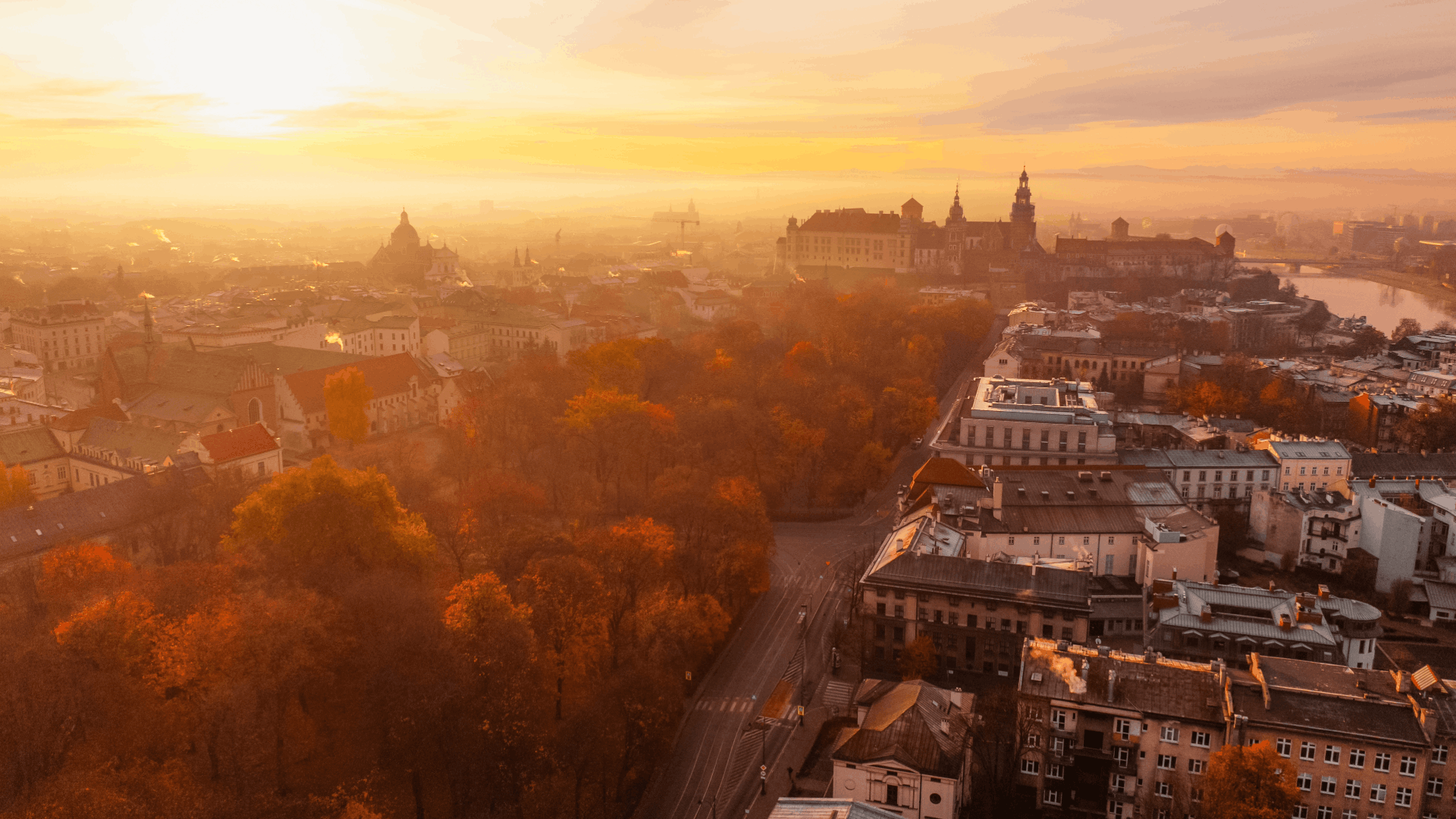
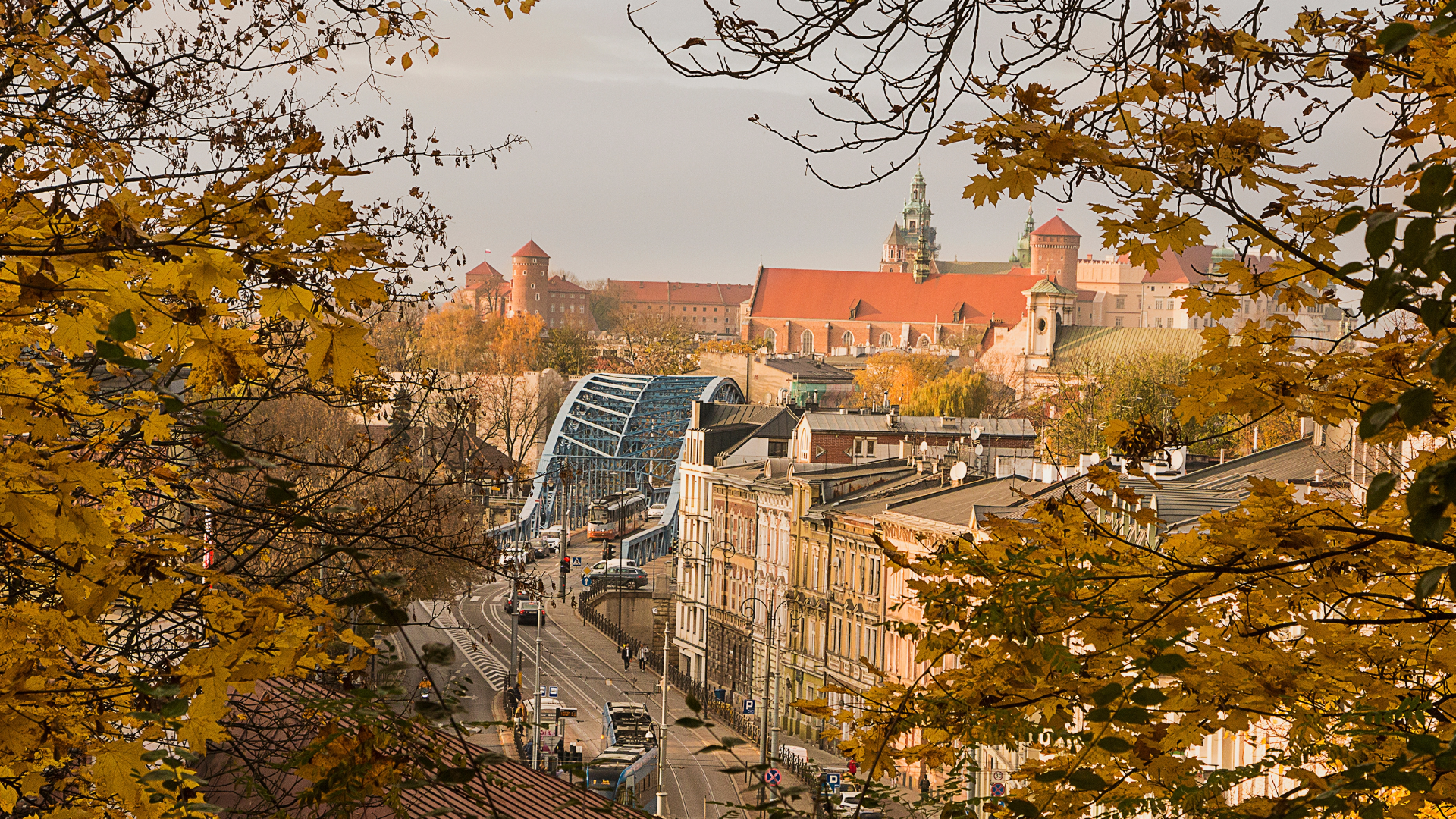
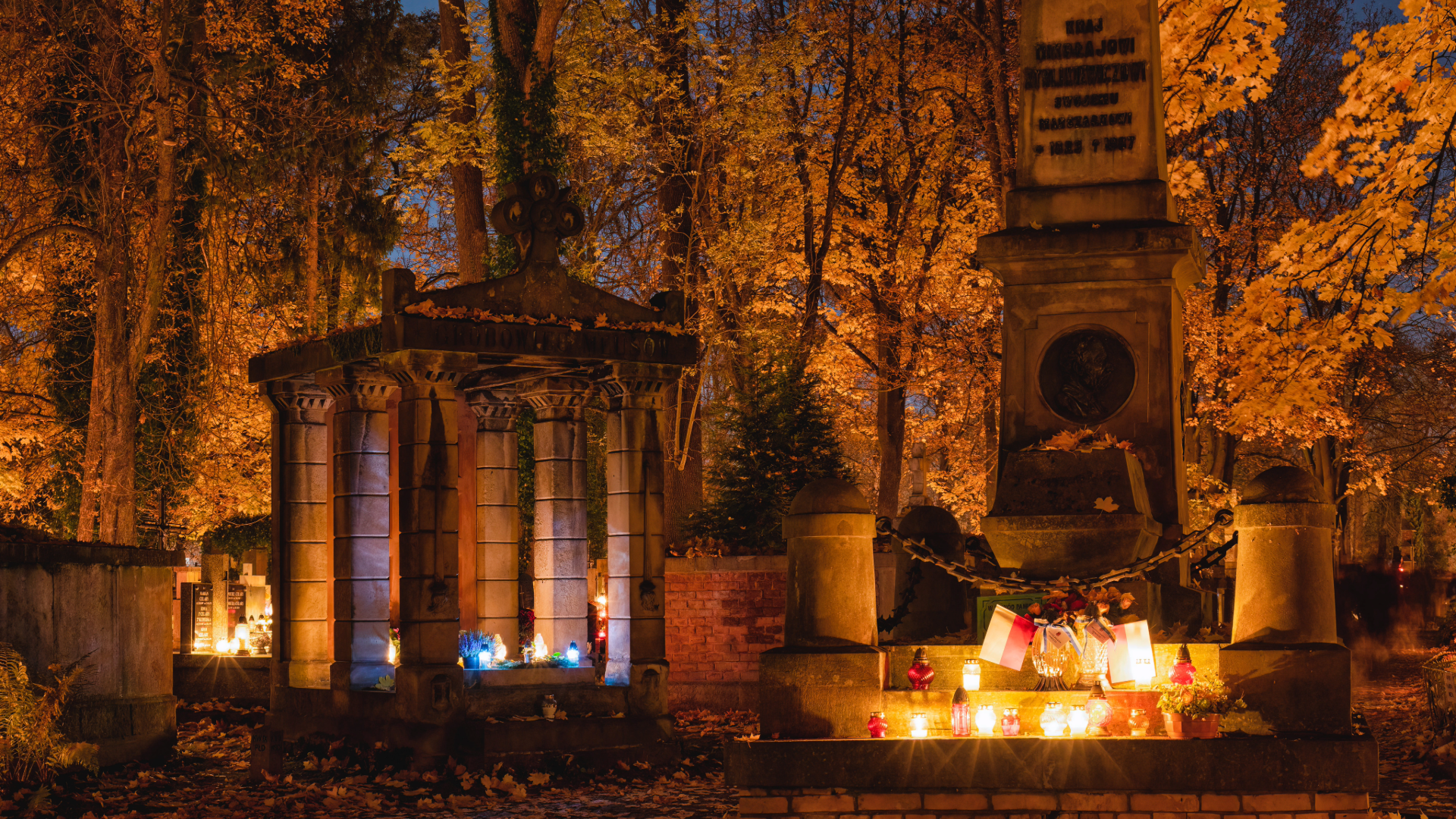
On November 1, Krakow wakes up to flowers. Chrysanthemums appear outside small shops, candle stalls line the streets near cemeteries, and trams carry families holding bags that seem too full for an ordinary Sunday. By evening, thousands of candles turn the city’s cemeteries into fields of light.
For visitors, this can be one of the most moving moments to see Krakow. It should also be approached differently from a museum visit or a sightseeing stop. All Saints' Day is a public holiday, a religious observance and, above all, a day when people come to remember relatives and friends. Rakowicki Cemetery is open to visitors, but the right approach is quiet, patient and respectful.
What All Saints' Day means in Poland
November 1 is All Saints' Day, known in Polish as Wszystkich Swietych. Families visit graves, clean them, bring flowers and light candles in memory of those who have died. The following day, November 2, is All Souls' Day, or Zaduszki, when many people return to the cemetery to pray and remember loved ones.
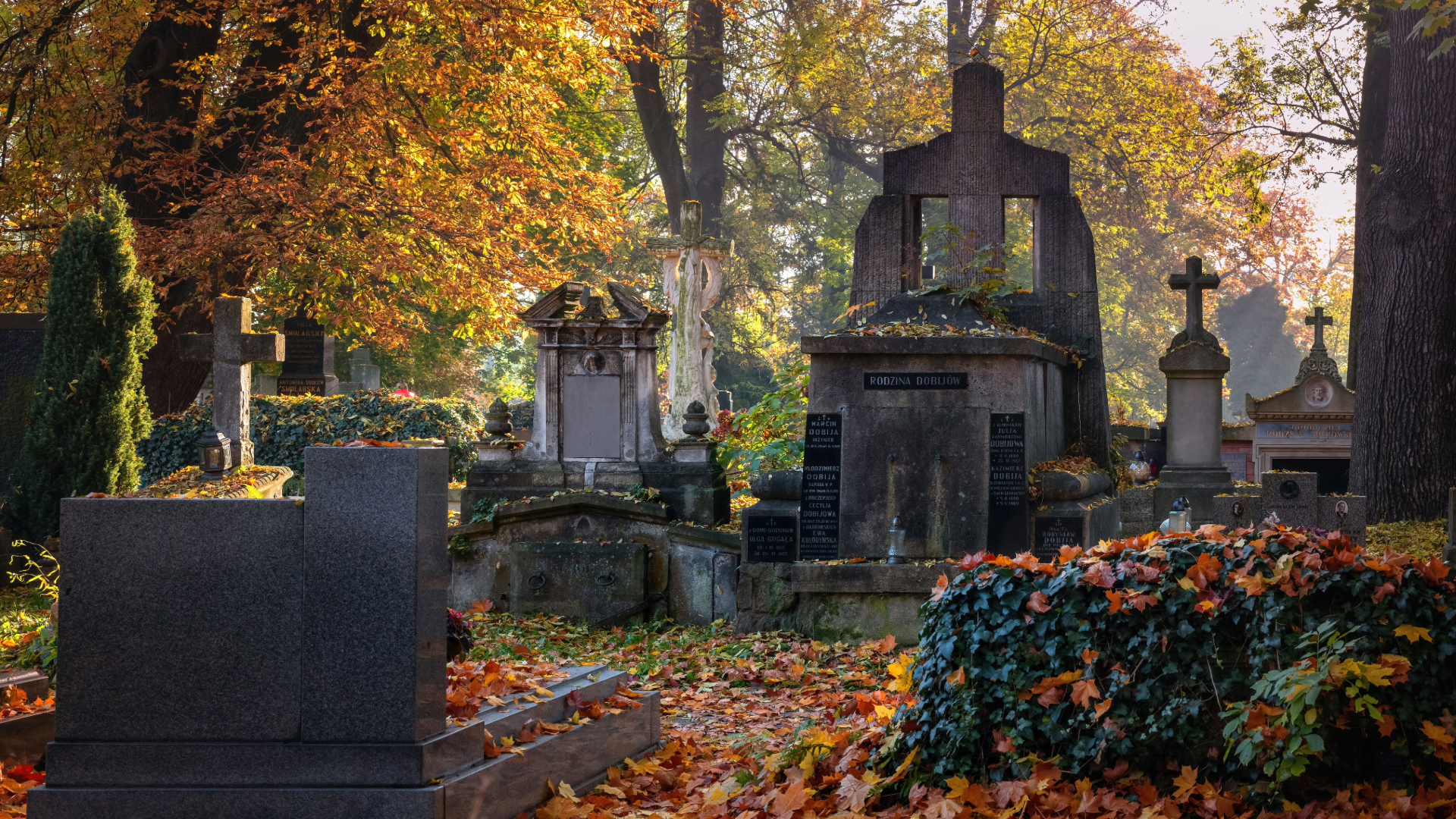
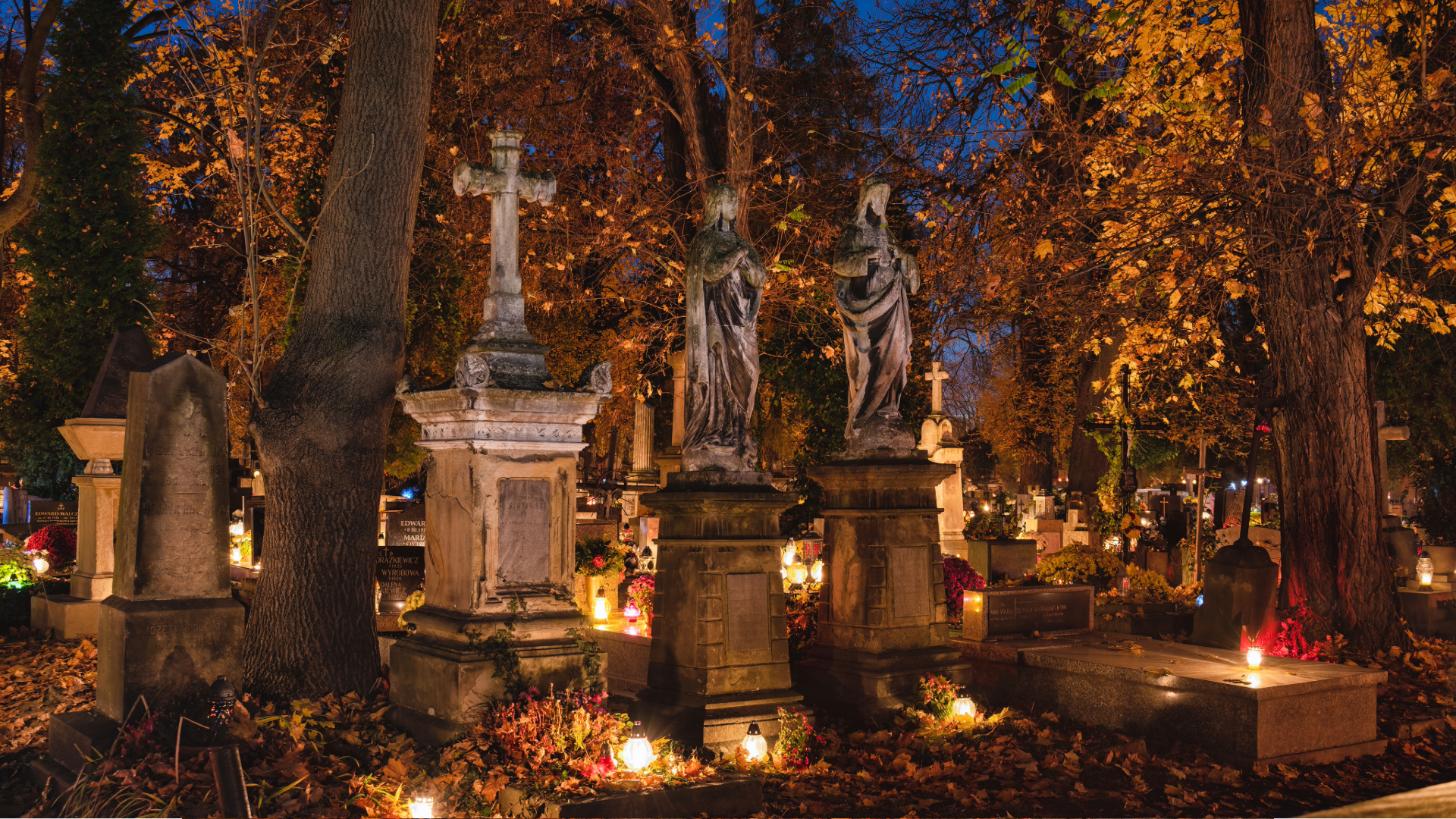
This is a nationwide Polish tradition, rather than something found only in Krakow. It feels particularly visible here because so many generations of Krakow families have buried relatives in the same historic cemeteries, especially Rakowicki. The cemetery is large enough to hold the graves of ordinary residents alongside artists, professors, politicians and soldiers whose names visitors may already have encountered elsewhere in the city. That mix is what gives the day its unusual atmosphere. A person may come to remember grandparents in one part of the cemetery, then pass the grave of a Nobel Prize-winning poet or a painter whose work hangs in the National Museum. The cemetery does not separate private grief from Krakow's wider history. Both exist side by side.
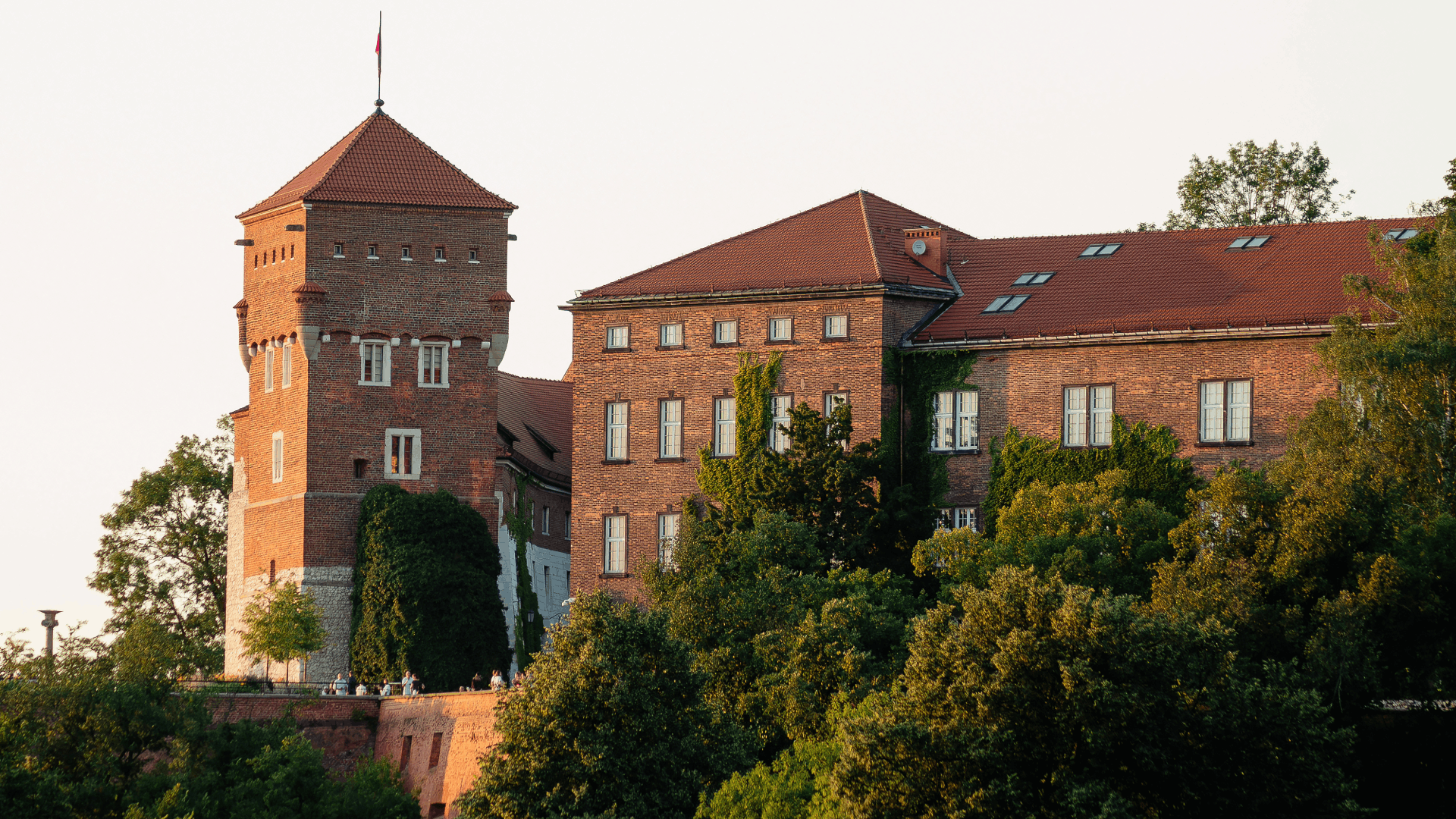
If you are staying in Krakow on November 1, expect altered opening hours. Many shops close, Wawel Castle is shut, and the streets around major cemeteries become extremely busy. This happens because the holiday is observed across the country, so workers, students and families are free to travel and visit graves during the same short period.
Rakowicki Cemetery: why it became Krakow's main necropolis
Rakowicki Cemetery was founded in 1801-1802, at a time when burials inside the old city and beside churches were being restricted for public-health reasons. Earlier generations had often been buried near parish churches, but overcrowded churchyard cemeteries were increasingly seen as a health risk in growing European cities. The new cemetery was created beyond Krakow's boundaries, on land near the road leading to the village of Rakowice. This is where its name comes from. The first burial took place in January 1803, when eighteen-year-old Apolonia Bursikowa was laid to rest there. Her original grave no longer survives, but a memorial plaque records her place in the cemetery's story.
Over the next two centuries, Rakowicki expanded several times as Krakow itself grew. It now covers more than 42 hectares and contains around 75,000 graves. That scale explains why it remains so central to the All Saints' Day experience: many Krakow families have relatives here, so the cemetery becomes one of the main destinations in the city on November 1. Its oldest section was redesigned in 1839 by architect Karol Kremer in the shape of a gateway, symbolising the passage between earthly life and eternity. At the centre stands the Resurrection Chapel, built in the 1860s with the support of the Helcel banking family. The cemetery was added to the heritage register in 1976 because its monuments, tombs and layout have artistic as well as historical value.
More than a cemetery: art, politics and family memory
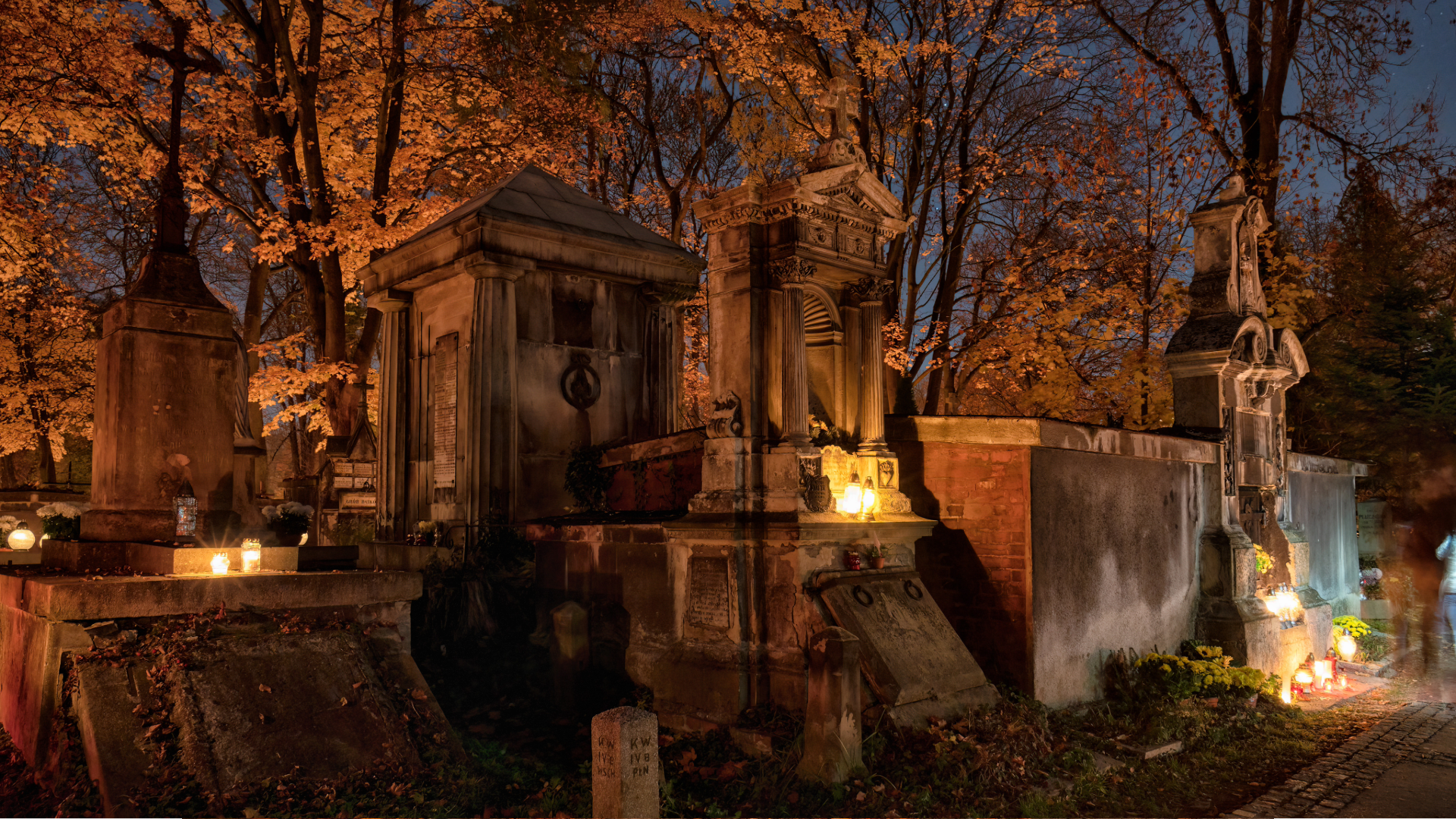
Rakowicki can feel like an open-air museum because many tombs were designed by leading Krakow architects and sculptors. But that description needs a little care. The artistic quality of the monuments is worth noticing, yet the site is still an active cemetery where people continue to bury and visit family members. The best way to understand it is as a record of who helped shape Krakow over the last two centuries. Writers, painters and musicians are buried beside mayors, scientists, soldiers and people whose names may never appear in guidebooks. Their graves show that the city did not become a cultural centre only through kings and churches. It was also built by teachers, artists, doctors, activists and families who lived here long after Krakow stopped being Poland's capital.
| Person or place | Why it matter in Krakow's story |
|---|---|
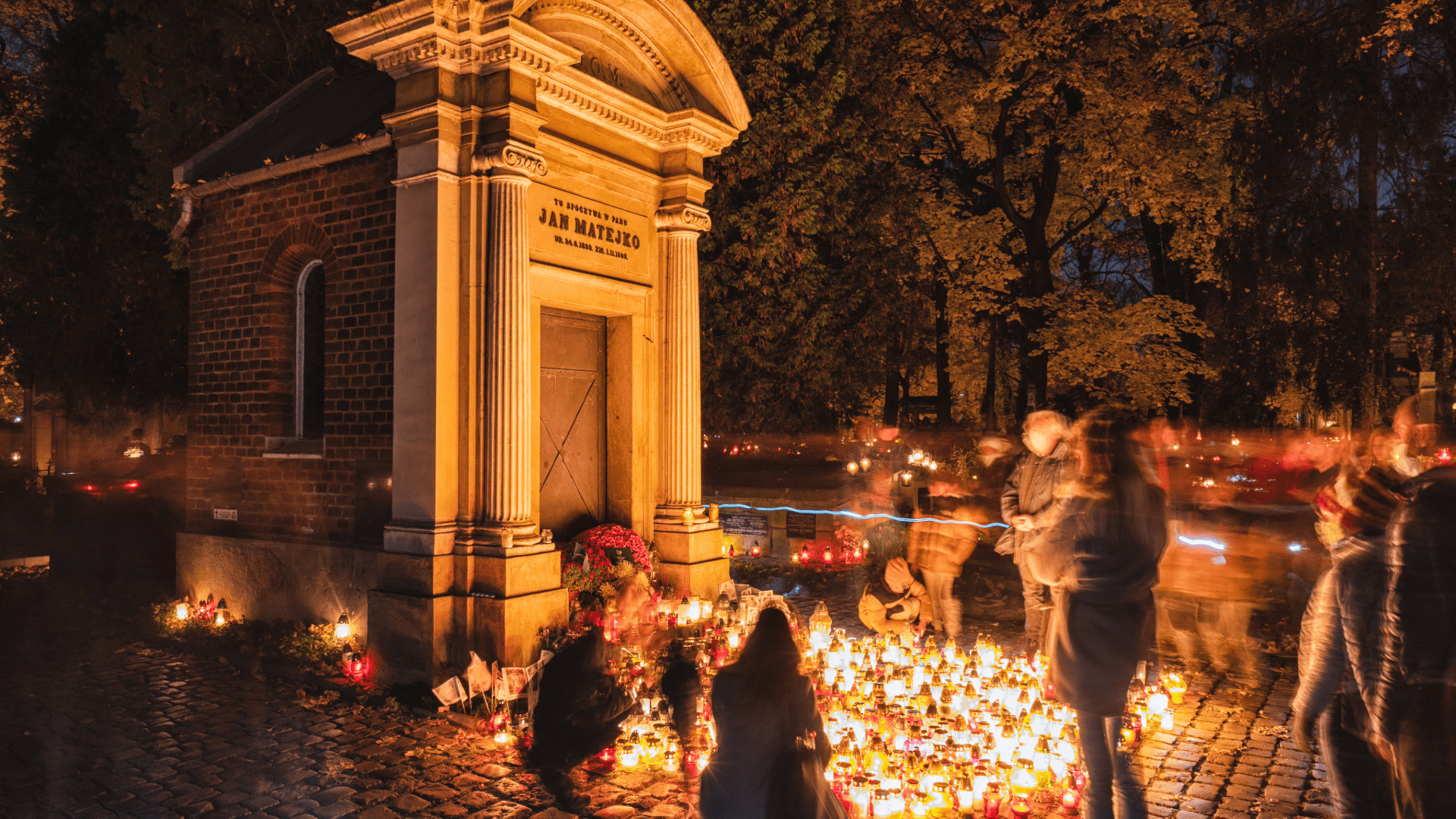
| Jan Matejko | His vast historical paintings helped Poles preserve a sense of national history during the 19th century, when Poland did not exist as an independent state |
| Wislawa Szymborska | Her Nobel Prize in Literature made her one of Poland's best-known modern poets around the world |
| The Kossak family tomb | Several generations of the Kossak family shaped Polish painting, literature and cultural life |
| Jozef Dietl | As Krakow's mayor and a physician, he helped modernise the city in the 19th century |
| Lucjan Rydel | His wedding inspired Stanislaw Wyspianski's famous play The Wedding, a key work in Polish literature |
| The Wojtyla family grave | The parents and brother of Pope John Paul II are buried here, connecting the cemetery directly to one of Krakow's most internationally recognised figures |
| Military cemetery at Prandoty Street | Its separate sections show how Krakow was affected by Polish independence struggles, the First World War and the Second World War |
The Wojtyla family grave is among the cemetery's most visited places because Karol Wojtyla, later Pope John Paul II, grew up in Krakow and returned to pray at the graves of his parents, Emilia and Karol, and his brother Edmund. A bronze monument nearby remembers those visits. The military section, established in 1920, tells another part of the city's story. It contains graves and memorials connected with the Polish Army, Krakow students who died during the First World War, British airmen and other wartime burials. Its presence makes clear that Krakow's history was shaped not only by culture, but also by the conflicts that repeatedly changed Poland's borders and independence.
The cemetery authority has prepared a visitor route covering 22 points in the historic cemetery and eight in the military section. Its printed guide, A Visit to the Rakowicki Cemetery, includes an English map and short descriptions of the most important graves and monuments. The full walk takes around two hours, so it is best saved for a quieter day after the holiday.
What makes November 1 different
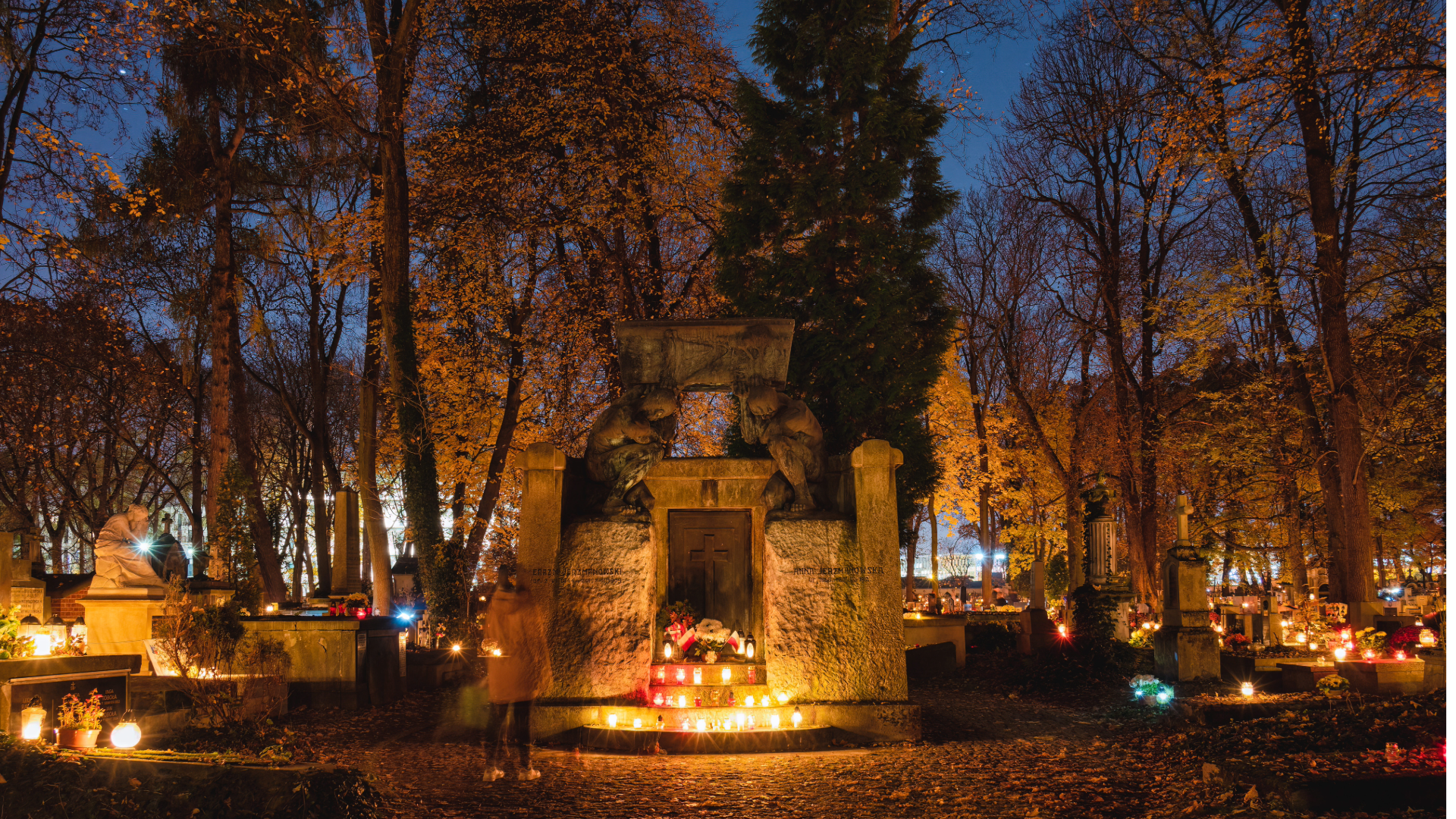
During most of the year, Rakowicki Cemetery can be quiet enough for a slow historical walk. On All Saints' Day, however, it belongs first to the people who have come to visit relatives. Families arrive throughout the day, often carrying flowers, candles and cleaning supplies. Some travel from other parts of Poland because November 1 is one of the few dates when the whole family can gather without work or school obligations. The candlelight is the most striking visual element, but it comes from a simple practical tradition. November evenings are dark and cold, and candles placed on graves represent remembrance, prayer and the continuing presence of the person being remembered. That is why even smaller family graves can be covered with dozens of lights by the end of the day.
The cemetery authority has prepared a printed guide,
Zwiedzamy Cmentarz Rakowicki. The linked information page is in Polish, but the guide itself includes an English map and translated descriptions of the main graves and monuments. Contact the Rakowicki Cemetery administration at ul. Rakowicka 26 before your visit to confirm that copies are available.
Visitor etiquette: how to be present without getting in the way
A respectful visit does not require elaborate rules. It mostly means remembering that the cemetery is full of people having private moments in public space.
- Keep your voice low. Families may be praying, speaking quietly or standing in silence. The cemetery feels different from a park because nearly every path leads past someone's relative.
- Stay on the paths. Older grave plots can be close together, and some surfaces are uneven. Walking between tombs or stepping across graves is both disrespectful and potentially unsafe.
- Take photographs carefully. Architectural details, autumn trees and candles can be photographed from a respectful distance. Do not photograph mourners, family gatherings, prayers or recently decorated graves.
- Do not confuse All Saints' Day with Halloween. Halloween is becoming more visible in Poland, particularly through bars, schools and costume events. November 1 has a separate meaning rooted in remembrance and religious tradition.
- Dress for the weather and the setting. Cemetery paths can be wet, slippery and crowded. Waterproof shoes, a warm layer and a jacket with a hood are more useful than an umbrella when you are moving through narrow paths.
- Leave every grave as you find it. Flowers, candles and small objects belong to the families who placed them there. Even if a grave looks unattended, do not move or rearrange anything.
Before you leave Rakowicki Cemetery
If you have a few extra minutes, look for the old eastern brick wall rather than another famous name on a tombstone. Several of its surviving epitaphs date from the early 19th century, including inscriptions for people whose original graves have long disappeared. The wall once marked the edge of the cemetery before Rakowicki expanded, and some of its bricks came from churches demolished during the same period.
It is a small but telling detail. A grave can vanish, a cemetery can grow beyond its original boundaries, yet a name may remain on a wall for another two hundred years. On November 1, when families bring candles to graves across Krakow, Rakowicki shows the same idea on a larger scale: remembrance is often less about grand monuments than about making sure someone has not been entirely forgotten.