


Visiting Wieliczka Salt Mine: A Comprehensive Guide

Hello Cracow • October 1, 2025

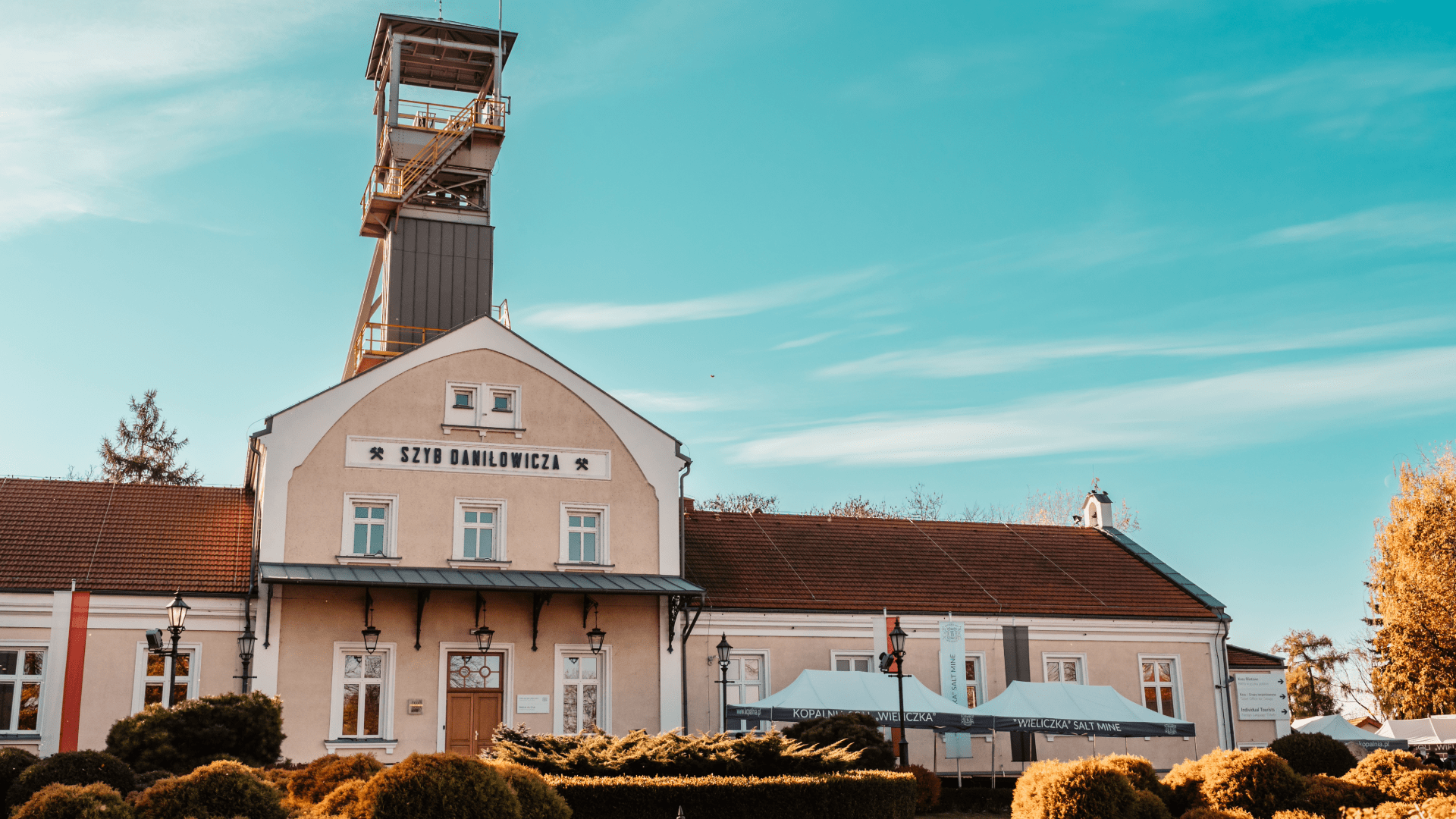
The Wieliczka Salt Mine is consistently cited as the most essential day trip from Kraków. Recognized in 1978 on the First UNESCO World Heritage List, this site holds a foundational place in global heritage preservation. The scale of the Wieliczka mine is staggering, with the main tourist route stretching 3.5 kilometers. Visitors descend to depths between 64 and 135 meters below the surface. This vast underground world was created over hundreds of years. It offers a unique chance to witness human labor and artistic devotion. Everything here is carved entirely from salt.

A visit to Wieliczka requires strategic planning due to the logistical and physical demands. These include navigating ticketing complexities and preparing for the moderate physical requirements, such as approximately 800 steps throughout the journey. For those prioritizing time and comfort, professional, pre-arranged packages offer a critical solution. Services like the Wieliczka Salt Mine Guided Tour offered by Hello Cracow eliminate logistical stress for visitors. They provide a licensed guide, guaranteed entry, and efficient, air-conditioned round-trip transport from Kraków. The entire experience is completed in a predictable 4.5 hours.

The UNESCO Legacy: A Journey to Magnum Sal

Wieliczka's history dates back to the Middle Ages, when its immense value earned the name Magnum Sal—The Great Salt. By the 13th century, the mine was firmly established as Poland’s largest salt source and became economically crucial. Breathtaking underground landscapes result from a balance of nature’s power and human ingenuity. The mine’s geology shows how natural forces sculpted rock into unusual, varied, and intricate formations. This created a perfect canvas for the artistry of miners.
The Legend of Saint Kinga

The founding of the mines is interwoven with the legend of Saint Kinga, patron of salt miners. Kinga was a historical figure, the 13th-century daughter of the King of Hungary. She later married a Polish Duke. Upon her engagement, she requested a dowry of rock salt instead of gold or jewels. She understood her future Polish subjects needed this vital resource far more. The legend recounts that Kinga threw her engagement ring into a Hungarian mine shaft before leaving. When she arrived in Wieliczka, miners discovered her ring inside the first lump of extracted salt.
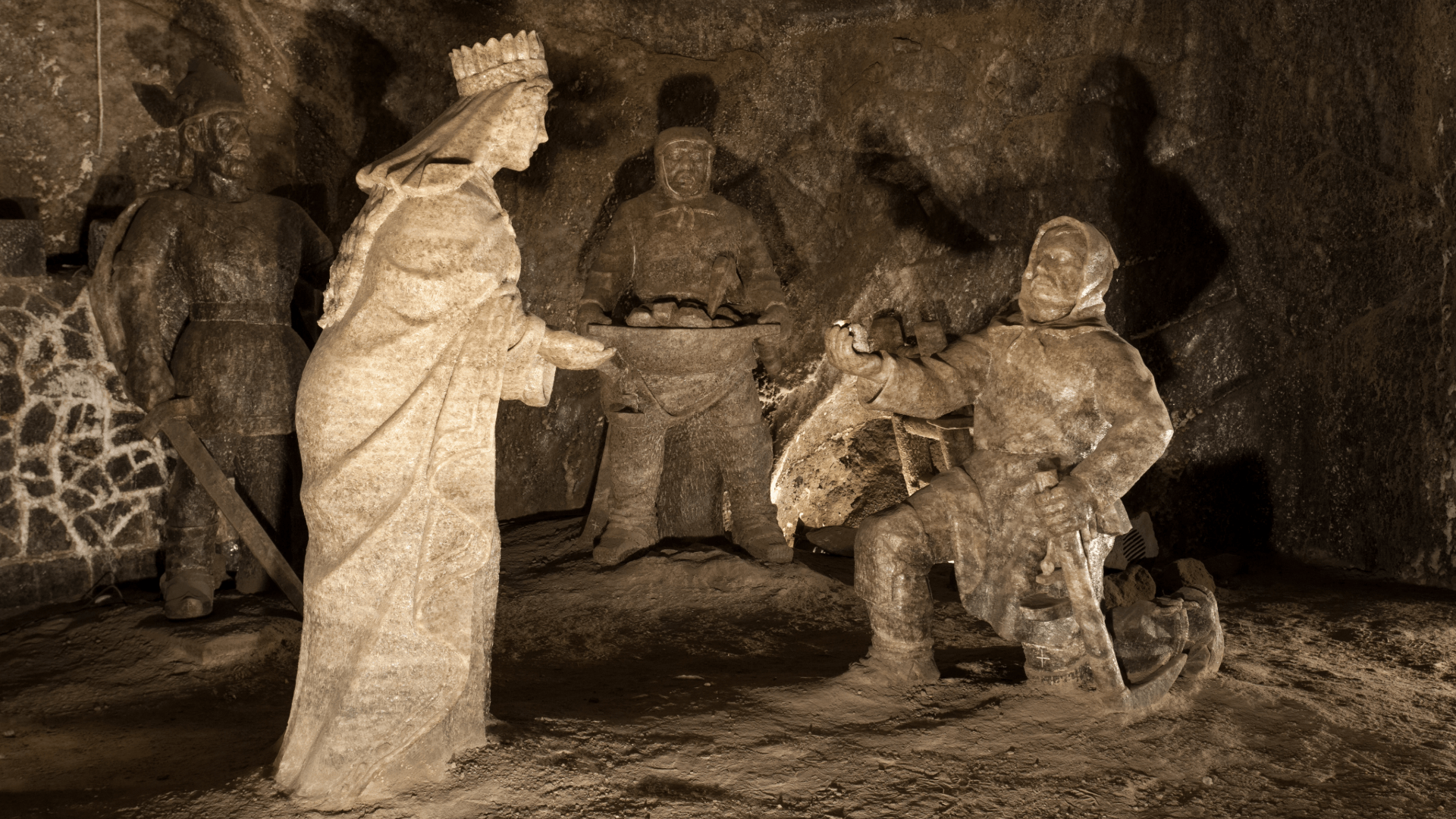
St. Kinga’s Chapel

The centerpiece of the Tourist Route, the Chapel of Saint Kinga, lies over 100 meters below the surface. It is perhaps the mine’s most recognizable chamber, celebrated for its exquisite detail. Visitors marvel at sparkling salt crystal chandeliers and intricate bas-relief sculptures decorating the chapel. The immense dedication behind this wonder is shown by its history. Carving and decorating the chapel took three men 67 years to complete.
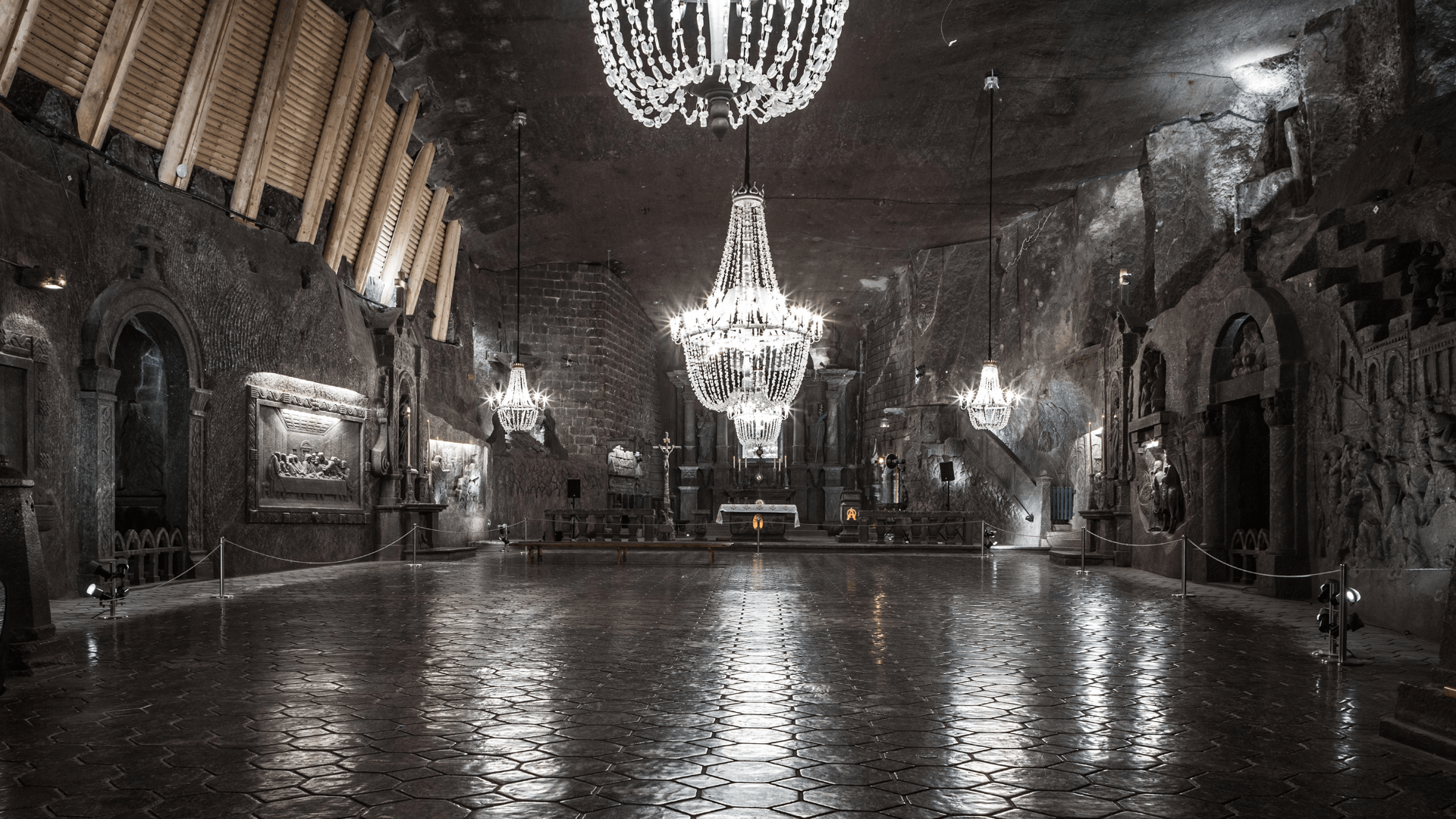
Architectural Masterpiece: Navigating the Tourist Route

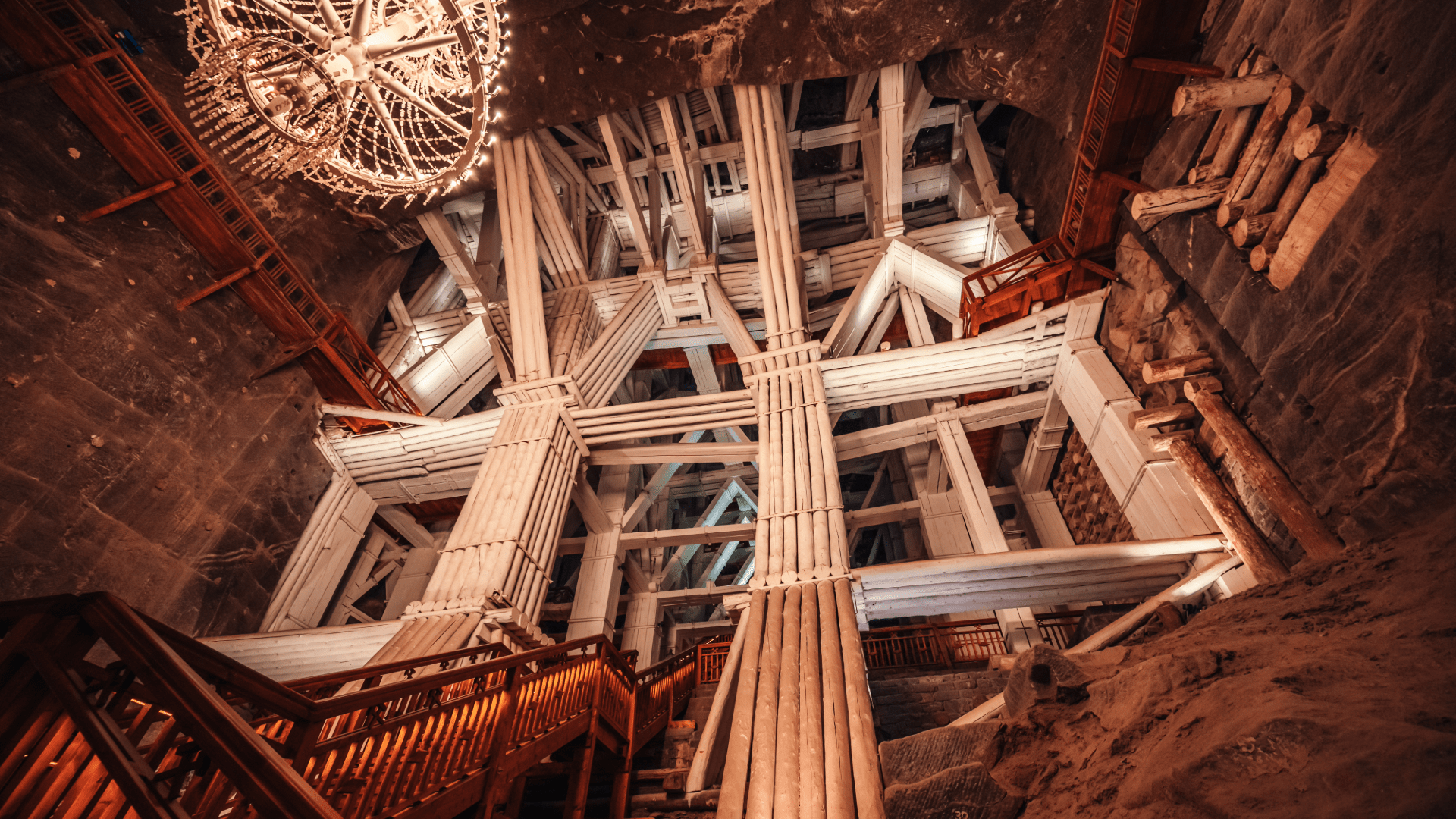
The standard Tourist Route spans 3.5 kilometers. A walk along this path requires visitors to be prepared for a minimum of two hours underground, with the option to extend the trip to three hours. The tour begins with the 350 steps to reach the first level of the mine, situated 64 meters underground. Over the course of the full 2–3 hour journey, visitors should anticipate navigating approximately 800 steps in total.

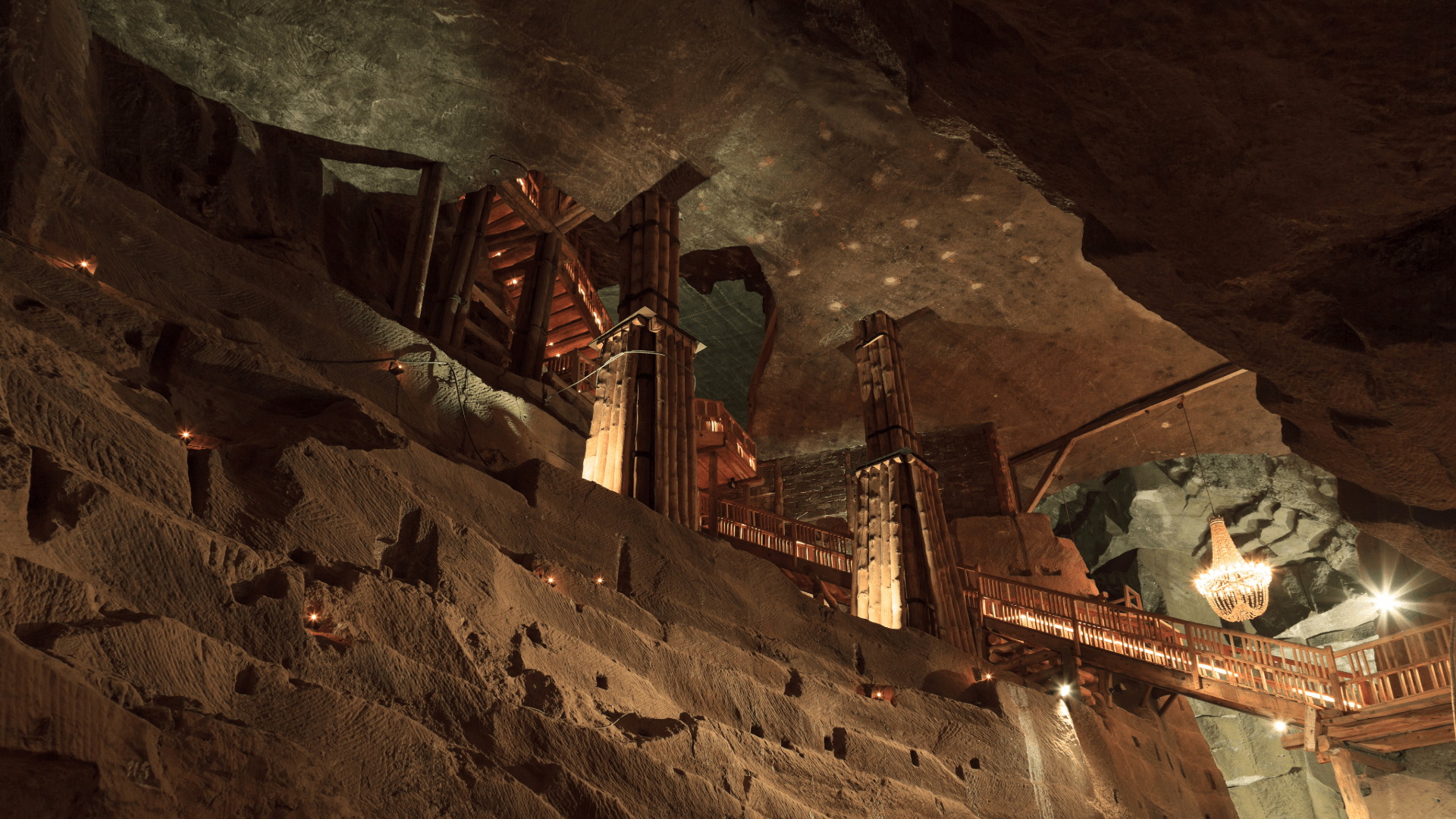
The Tourist Route functions as an underground art gallery, showcasing intricate carvings, statues, and subterranean salt lakes. Along the route, visitors pass through original mining tunnels and observe devices and tools that serve as visceral reminders of the daily struggles faced by generations of miners. Due to organizational and historical integrity concerns, touring the mine by an organized group requires mandatory guidance. 
Essential visitor rules and preparation checklist

  • Punctuality is paramount: You must be on time. Your driver will wait a maximum of 5 minutes. Once the scheduled tour starts at the mine, it is not possible to join the guide or group independently, and being late may result in denial of entry. 
  • Trust the expert schedule: The departure time provided by your booking platform is often tentative. Rely on the final, confirmed time provided by the tour operator, Hello Cracow, which is synchronized with the mine's official schedule. 
  • Dress warmly: The temperature underground is a constant 14°C (57°F) year-round. We strongly advise dressing in layers (e.g., a sweater or light jacket) to ensure comfort during the multi-hour tour. 
  • Wear comfortable footwear: The route involves significant walking over 3.5 kilometers. You should wear comfortable, non-slip shoes, as there are many steps and varied surfaces to navigate. 
  • Be prepared for steps: The tour includes approximately 800 steps in total, with 350 steps descending immediately at the very beginning to reach the first level. The return to the surface is handled conveniently by a lift. 
  • Mind the bag size: The maximum size of the bag permitted is 30cm x 20cm x 10cm. Any larger bags can be left safely locked inside the transport vehicle during your visit.
  • Mobility & strollers: Due to the 800 steps and uneven terrain, the full tourist route is not suitable for strollers or visitors with significant mobility problems.
Visit the wonders

The Wieliczka Salt Mine is an unmissable destination and an essential component of any visit to Kraków. To ensure the most efficient, comfortable, and deeply enriching exploration of Lesser Poland, secure your guaranteed entry to the Wieliczka Salt Mine today.

By Hello Cracow February 17, 2026
The city of Krakow stands as a unique monument to European history, where medieval grandeur meets the stark, haunting reminders of the 20th century’s greatest tragedy. For international tourists, a visit to Krakow is often a pilgrimage of memory. To truly honour this history, one must go beyond the surface-level sightseeing and delve into the narratives that define the Jewish experience in Poland. From the experience of Hello Cracow, a meaningful journey begins with preparation — specifically through the literature that has shaped our global understanding of the Holocaust. This report serves as a definitive guide for the modern traveller, weaving together historical analysis, literary recommendations, and practical travel expertise to ensure a visit that is both educational and deeply respectful.
By Hello Cracow February 11, 2026
Krakow remains an exceptionally affordable destination for international travelers in 2026, offering a high-standard European experience at a price point significantly lower than Western capitals like London, Paris, or Vienna. While global inflation has led to moderate price increases, the city continues to offer ca. 50% discounts on hospitality, dining, and cultural attractions compared to the UK or Scandinavia. A mid-range traveler can expect to spend approximately 350-500 PLN ($ 110–$140/£75–£100) per day, which covers boutique accommodation, a restaurant meal, and entry to major historical sites. The retention of the Polish Zloty (PLN) and high card acceptance across the city mean visitors can get the most from their spending while enjoying easy digital payments.
By Hello Cracow February 5, 2026
Krakow in February 2026 stands as a monumental intersection of global modernization and deeply rooted Slavic tradition. Historically, the second month of the year was viewed as a quiet, frigid period of transition between the holiday season and the awakening of spring. However, the 2026 winter season has redefined this narrative, positioning the city as a vibrant cultural corridor. This transformation is driven by the strategic relocation of world-class events, such as the Intel Extreme Masters, alongside the local winter school break, which breathes a unique local energy into the city’s public spaces.
By Hello Cracow February 1, 2026
The definitive answer for travelers seeking the most profound cultural experiences in Poland is to focus on the Malopolska region, home to a dense concentration of UNESCO World Heritage sites, including the Historic Centre of Krakow, the Wieliczka Salt Mine, and the Auschwitz-Birkenau Memorial. Visiting these sites during the winter months provides a unique, intimate atmosphere with fewer crowds, particularly when utilizing professional guided services to navigate the specific winter logistics, such as smog monitoring and early sunsets.
By Hello Cracow January 21, 2026
Before you stand on the grounds of Auschwitz-Birkenau or walk the halls of Schindler’s Factory , cinema can be a powerful bridge to the past. But in a world filled with romanticized "historical fiction," choosing the right source is a matter of respect. As local experts who walk these memorial sites daily, we advocate for the truth over "Hollywood tropes." The following films are raw, historically accurate reflections of human nature. Whether you are preparing for your first trip or reflecting on a past visit, these 10 essential movies provide the honest framework needed to truly understand the history of the Holocaust and World War II
By Hello Cracow January 13, 2026
For the traveler visiting Krakow between January and March, the strategy for scenic viewing must shift radically from the summer playbook. Here is the bottom line: The famous medieval towers of the Main Market Square, the Town Hall Tower and the St. Mary’s Bugle Tower , are generally closed. Therefore, to capture the panoramic essence of the city in winter, you must pivot to two alternatives: The Mounds: Specifically Kosciuszko Mound and Krakus Mound. These offer the best open-air views. However, you are fighting daylight. Sunset occurs as early as 4:00 PM in January. You must arrive at Kosciuszko Mound by 2:30 PM to navigate the museum and reach the summit for the "Golden Hour" before it closes at 3:30 PM. Heated "Sky" Venues: Replace the wind-swept towers with glazed, heated observation decks. The best accessible view of the Old Town is from Cafe Szal (atop the Sukiennice), and the best view of the Wawel Castle is from the Groble Sky Bar or the riverside room interiors of the Sheraton Grand (as their open-air roof terrace is closed for the season). Chase the light early (sunrise is late, around 7:30 AM), prioritize the mounds for clear air days to see the Tatra Mountains, and reserve the evenings for ground-level magic like the illuminated Vistula Boulevards.
By Hello Cracow January 6, 2026
January changes Krakow in a quiet, almost cinematic way. The crowds thin out, the pace slows, and the city exhales after December’s intensity. What remains is something more intimate: streets wrapped in winter light, church towers rising through morning mist, and the soft crunch of snow underfoot in the Old Town. This is when Krakow feels most authentic. The Vistula drifts lazily beneath a pale sky, cafés glow warmly against the cold, and medieval facades take on a storybook quality under frost or fresh snowfall. Without the pressure of peak season, the city reveals its rhythm, unhurried, reflective, and deeply rooted in centuries of history that still shape everyday life.
By Hello Cracow January 6, 2026
Krakow is one of Europe’s most family-friendly cities, blending medieval legends, interactive learning, and high-energy attractions. Its compact Old Town allows families to explore comfortably without long travel times or logistical stress. Indoor museums and attractions guarantee entertainment during rainy afternoons or winter weather. From high-tech exhibits to snowy walks around Wawel Royal Castle, experiences feel educational and exciting.
By Hello Cracow December 26, 2025
The arrival of winter in Krakow signals a refined blend of cultural heritage, religious tradition, and tourism-driven urban space. As Poland’s former capital and a UNESCO World Heritage site, the city undergoes a visible transformation. It shifts from an academic and historical center into a multisensory festive landscape. This change extends beyond surface aesthetics. It reflects a profound socio-cultural process that has been shaped over centuries. Long-standing rituals, from elaborate nativity scenes to strict Christmas Eve customs, remain essential. Today, these traditions intersect with the expectations of a rapidly growing global tourism market.
By Hello Cracow December 17, 2025
Holidays are coming, and gift dilemmas return every year. The best gifts aren’t things, but moments and memories. Krakow offers experiences that relax, inspire, and connect. Its historic streets mix culture, charm, and calm in every corner. Nearby Podhale hides geothermal waters that soothe body and mind naturally. People increasingly crave memories and shared moments over material objects. The joy of things fades quickly. Millennials and Gen Z prefer experiences that connect and inspire. Studies show 82% would choose experiences over objects , as memories shape personal stories. Evening trips to thermal baths provide a relaxing escape from work stress. They are premium gifts, creating laughter, shared moments, and lasting stories.
More Posts