



The History and Nature of Dunajec River Rafting: A 19th-Century Tradition
Dunajec River Rafting is Poland’s most iconic nature escape, an 18-kilometre journey through the heart of the Pieniny Mountains on traditional wooden rafts steered by local highlanders. This 19th-century tradition offers a rare opportunity to witness vertical 300-metre limestone cliffs and untouched wildlife from a perspective that is completely inaccessible by car or hiking trail, making it the ultimate tranquil getaway from the bustling streets of Krakow. Imagine leaving the medieval squares behind as the city skyline shifts into the jagged, pine-scented peaks of the Pieniny National Park. Here, the river has spent millennia carving its way through the earth, creating one of Europe's most dramatic natural gorges.
Why is the Dunajec Gorge called a "Natural Z-Shape"?
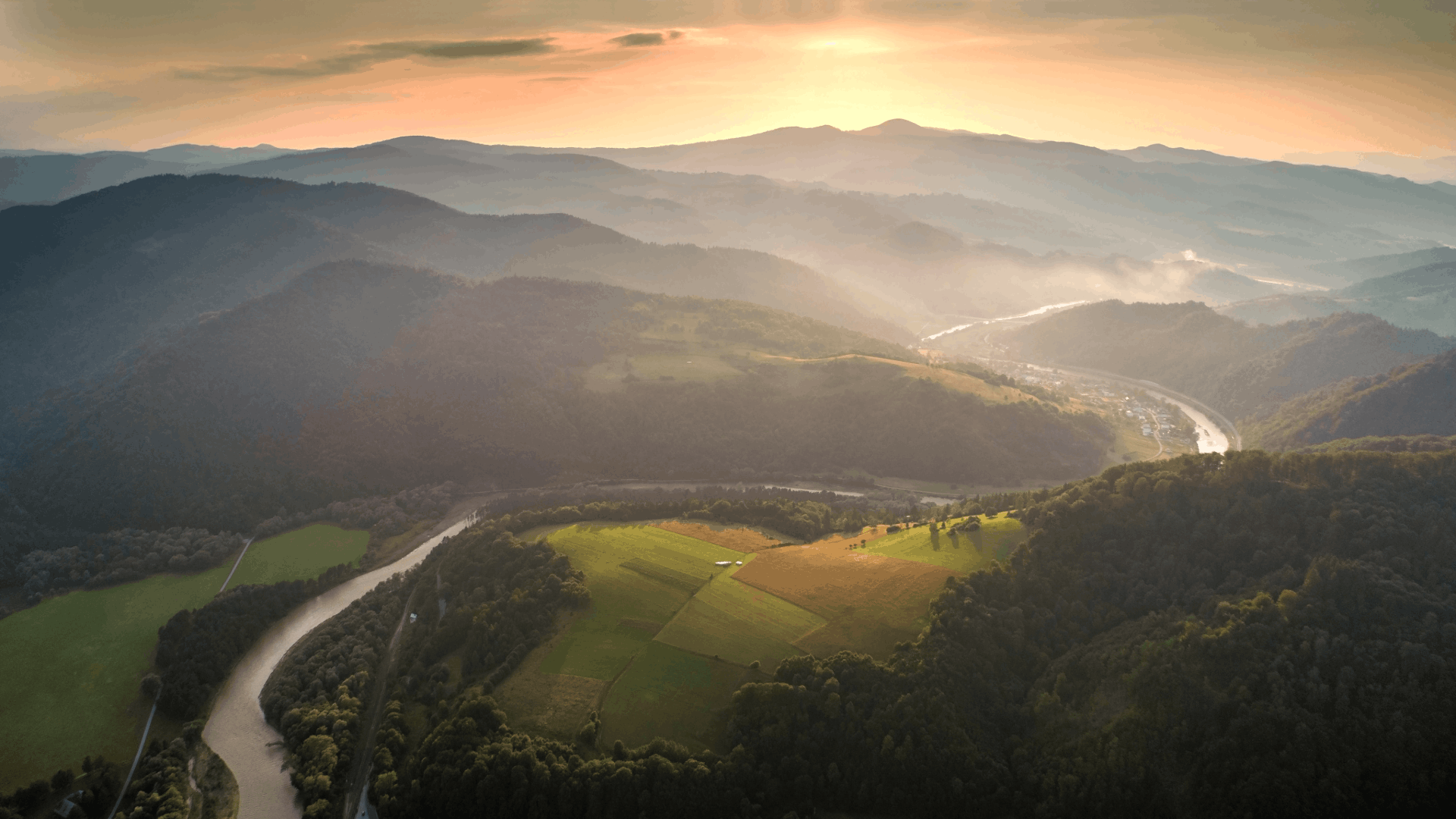
The most striking feature of the Pieniny Mountains is the way the Dunajec River carves its path through the massive limestone ridges. Unlike most rivers that follow the easiest route around obstacles, the Dunajec cuts directly through the heart of the mountains, creating a series of seven sharp, spectacular loops known as the "Z-shape" gorge. Over an 18-kilometre stretch, the river twists so dramatically that at several points, you find yourself heading in the exact opposite direction from where you started just minutes before. The sheer verticality of the limestone walls — some reaching up to 300 metres high — creates a natural amphitheatre where the acoustics and the scale of the rock formations are truly humbling.
We recommend keeping your eyes on two specific peaks that define the skyline of the Pieniny National Park:
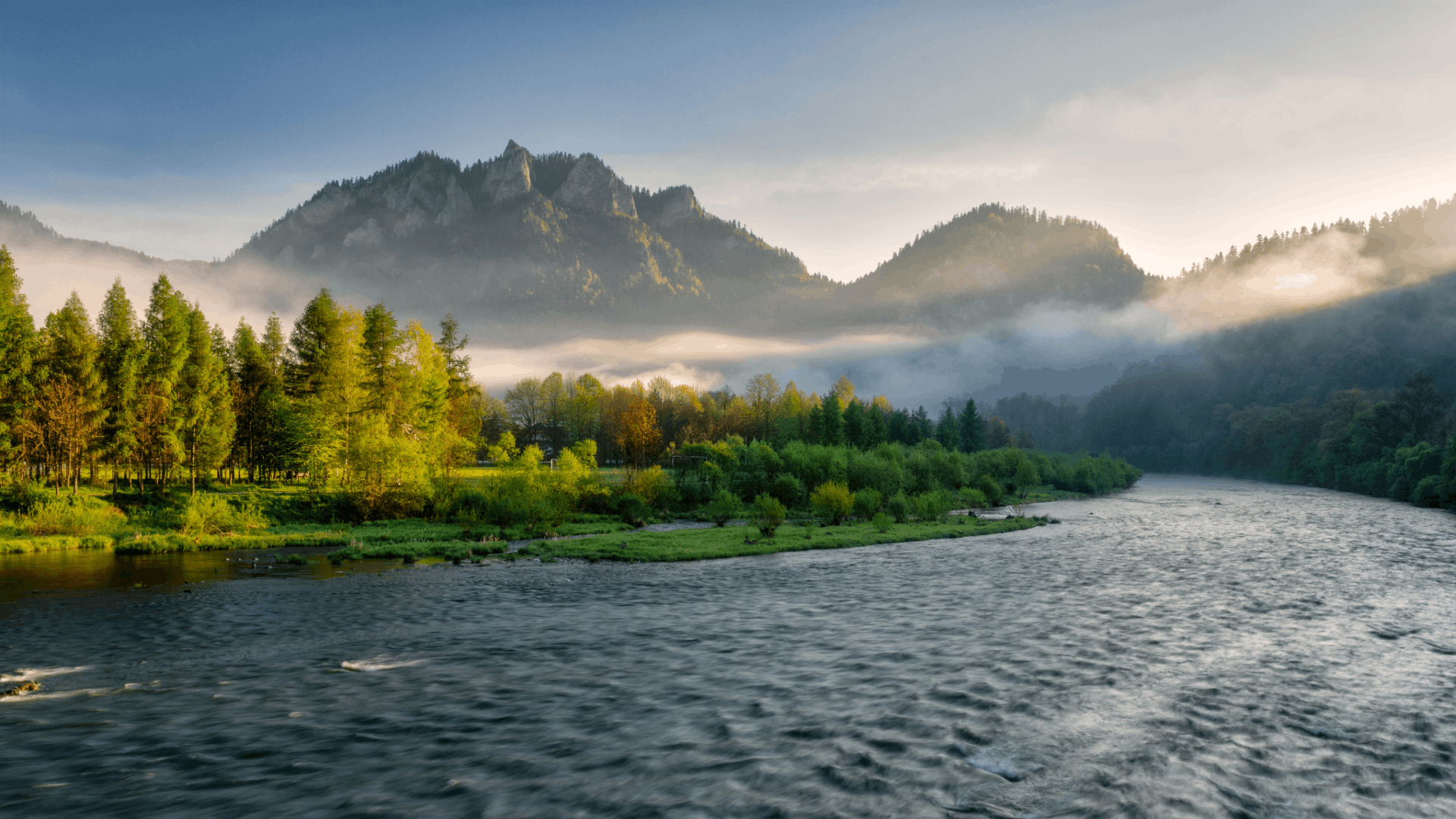
- Three Crowns (Trzy Korony): The highest and most famous formation in the range. From the river level, its five jagged limestone crags look like a massive stone crown. It is the architectural centerpiece of the gorge.
- Sokolica (Falcon’s Crag): Famous for its steep, 310-metre drop directly into the river. For decades, the summit was home to Poland's most famous pine tree, a resilient 500-year-old bonsai-like relic clinging to the edge of the abyss.
The most breathtaking moment occurs at the
Janosik Leap, the narrowest point of the gorge, only 12 metres wide. Legend says the legendary highland outlaw Janosik jumped across the river here to escape his pursuers, leaving his footprints embedded in the rock on the other side. This combination of geological force and local folklore is what makes every turn of the river feel like a new chapter in a story written by nature itself.
What animals can you see in the Pieniny National Park?
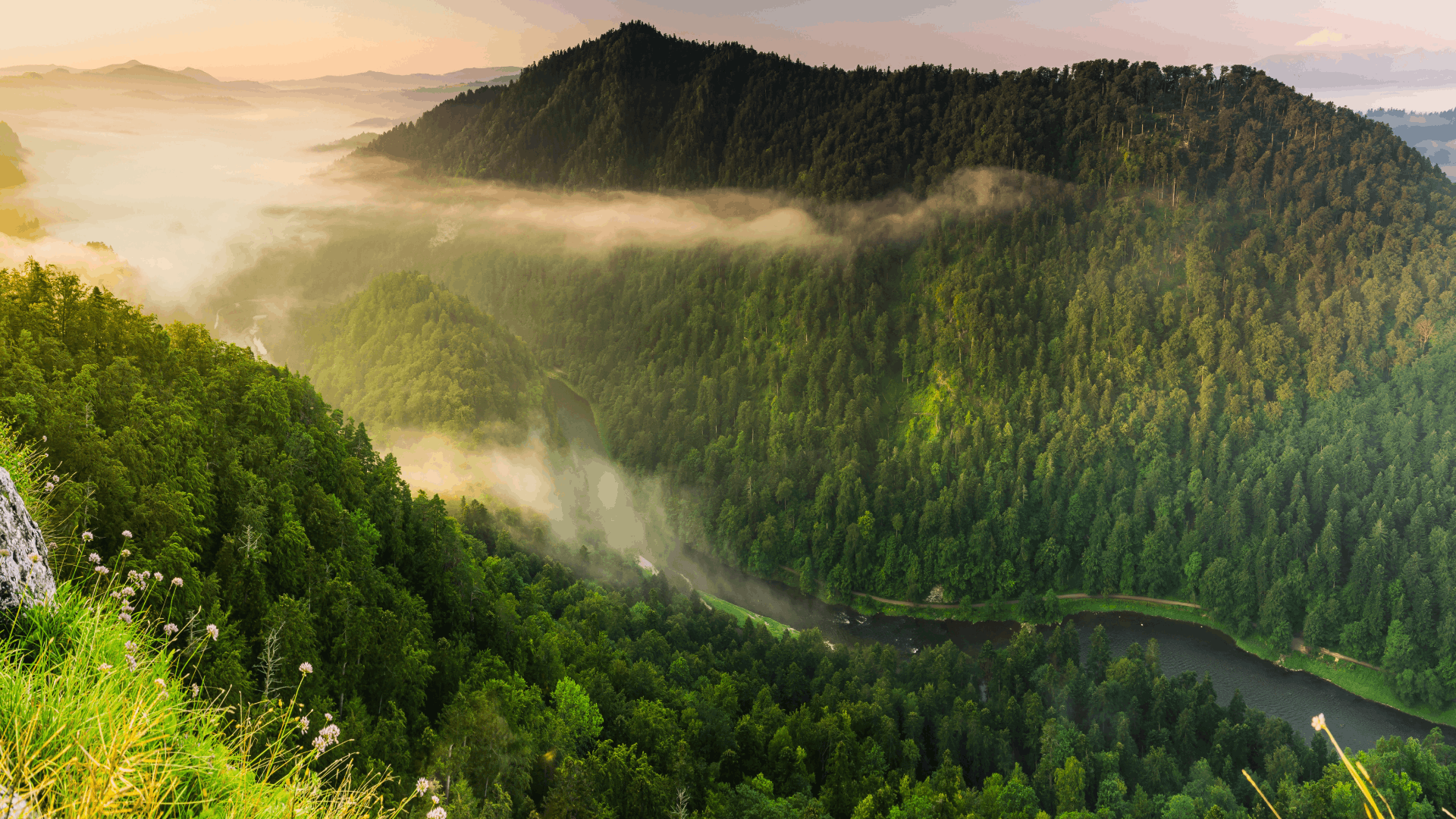
Navigating the Dunajec is like floating through an open-air natural history museum. The limestone cliffs and dense beech forests provide a unique microclimate where alpine species meet lowland wildlife. The best time for spotting these creatures is during the early morning, when the mist still hangs low over the water, and the riverbanks are at their quietest.
Keep your eyes peeled for these rare sightings:
- The Black Stork: Unlike its more famous white cousin that nests on village chimneys, the black stork is a shy forest dweller. It builds its nests on secluded cliff ledges or in the crowns of ancient oaks. Spotting its glossy black feathers and bright red beak near the water’s edge is a highlight for any birdwatcher.
- The Apollo Butterfly: This is one of Europe’s rarest and most beautiful mountain butterflies. With its large white wings decorated with striking red-and-black "eye" spots, it is a relic of the ice age. The sunny limestone slopes of the Pieniny are one of the few places in Poland where this fragile species still thrives.
- The Lesser Spotted Eagle: Look up toward the peaks of Trzy Korony or Sokolica. These powerful raptors are frequently seen circling the summits, using the thermal currents rising from the gorge to hunt.
- River Wildlife: If you watch the shoreline closely in the quieter, shallower sections of the river, you may see deer or even the occasional wildcat coming down from the forest to drink. The crystal-clear water is also home to the Danube salmon, a legendary fish that can grow to over a metre in length.
The traditional rafters of the Pieniny Mountains - Flisacy
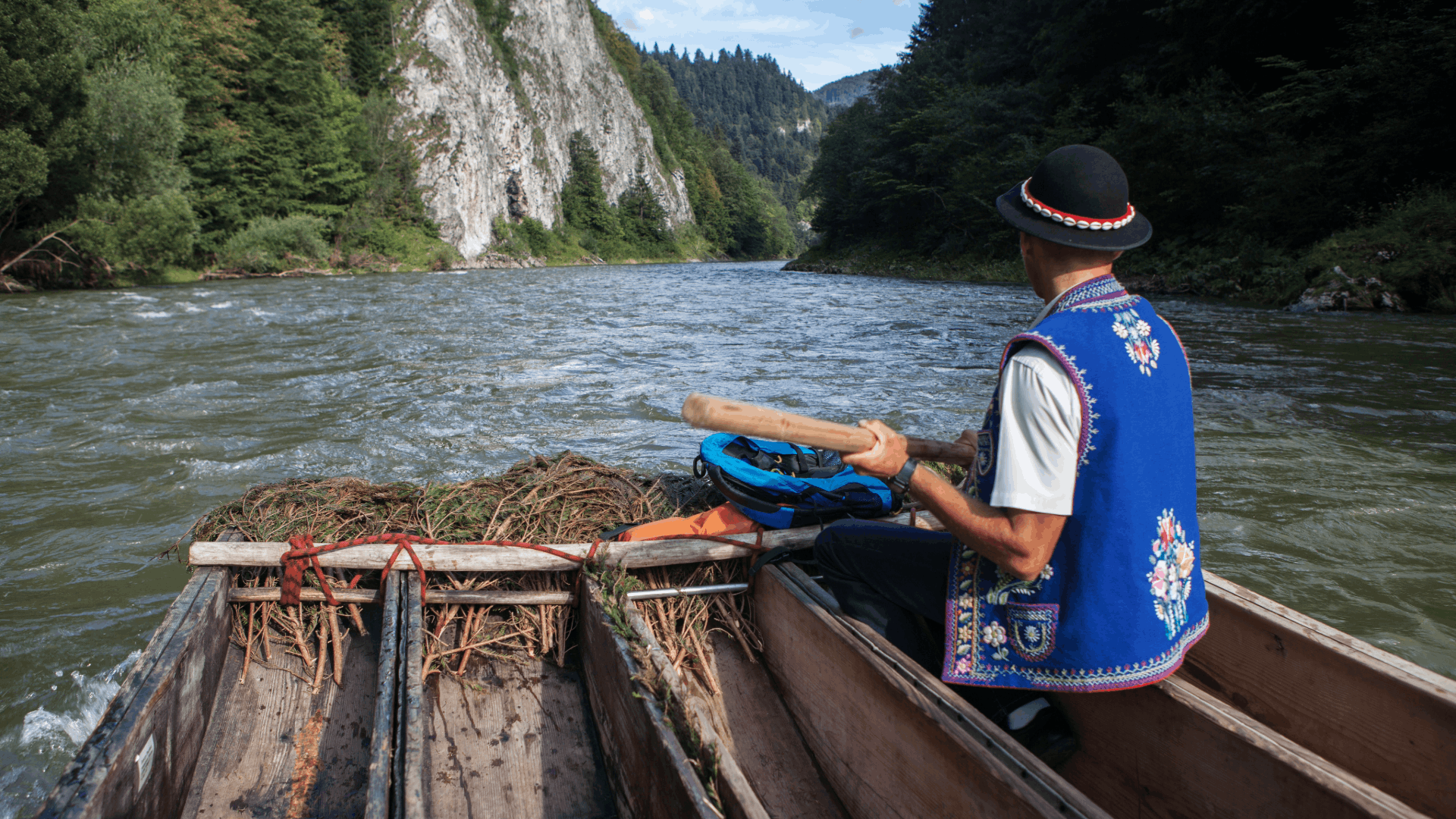
While the scenery is spectacular, it is the men navigating the river who turn a boat ride into a deep cultural immersion. These are the Flisacy — the traditional rafters of the Pieniny Mountains — and their guild is one of the oldest and most respected in Poland. Every raft is steered by two experts who have spent years learning the currents, rocks, and hidden depths of the Dunajec. Becoming a rafter is not a casual summer job; it requires a rigorous three-year apprenticeship followed by a difficult state exam.
The Anatomy of the Rafter’s Costume
- The Blue Vest: Decorated with intricate, colorful embroidery, these vests are unique to the Pieniny region. The patterns often feature local wildflowers and geometric shapes that have been passed down through families for generations.
- The Black Felt Hat: Look closely at the band of shells encircling their hats. Historically, each small cowrie shell represented a successful long-distance trip down the Vistula River. While today’s trips stay within the gorge, the tradition of adding shells remains a mark of experience.
- The "Spryska": There are no oars or rudders here. The rafters use long wooden poles to push off the riverbed and steer through the sharpest bends of the "Z-shape" gorge.
The Legend of the Seven Monks
As you glide past the towering limestone cliffs, your rafters will likely point out a series of seven distinct rock needles. Local lore tells the story of seven monks from a nearby monastery who were turned to stone as a punishment for their sins. According to the rafters, the rocks still stand there today as a silent warning to travelers.
The Red Monastery and the Legend of the Flying Monk
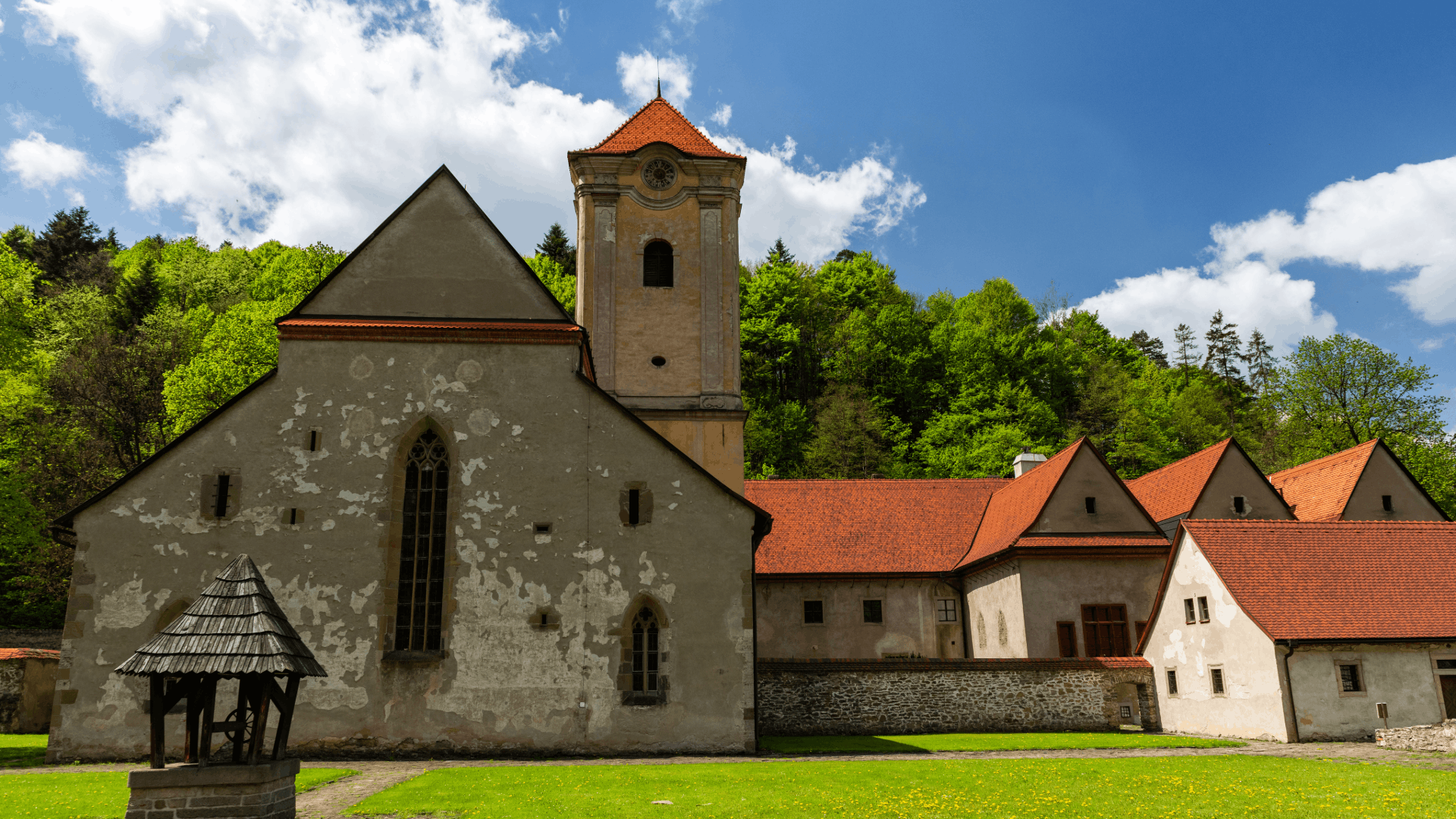
As you drift through the gorge, your raft will pass directly beneath the walls of the Red Monastery (Červený Kláštor), located just across the river on the Slovak side. Founded in the 14th century, this Carthusian monastery is one of the most mysterious spiritual sites in Central Europe. While its red-tiled roofs are a landmark for every rafter, its most famous resident was Brother Cyprian, a legendary 18th-century monk who was a master herbalist, physician, and — according to local lore — an early aviation pioneer. Legend says that Cyprian built a set of wings from wood and feathers and successfully flew from the peak of Three Crowns down into the monastery courtyard.
Essential Dunajec Rafting Facts
| Feature | Details |
|---|---|
| River distance | Approximately 18 km (11 miles) |
| Average duration | 2 to 3 hours (depending on current and river level) |
| Rafting season | April 1st to October 31st |
| Difficulty level | Class I (Gentle, steady current—suitable for all ages) |
| Traditional method | Navigated by two Flisacy (rafters) using wooden poles |
| Max altitude | 982 m (Trzy Korony - Three Crowns Peak) |
| Key attractions | Dunajec Gorge, Niedzica Castle, Dębno Wooden Church |
Plan your Pieniny adventure today!
At Hello Cracow, we believe that the most unforgettable travel stories are those found just slightly off the beaten path. While thousands of tourists flock to the bustling streets of Zakopane every day, the Pieniny Mountains remain the true hidden gem of the region. Located only about 60 minutes from the heart of the Tatras, the Dunajec Gorge offers a completely different atmosphere — wilder, more intimate, and significantly less crowded. It’s the perfect, tranquil balance to the high-energy mountain trails, offering a serene landscape that many visitors to Poland simply overlook.
Ready to swap the city noise for the fresh mountain air and the gentle drift of the river? We have an exclusive gift for our readers. Book your Dunajec River Rafting tour through our website and use the code
SUN15 at checkout to receive a 15% discount on your booking (this code remains valid through April 30, 2026). Don't miss out on Poland's most spectacular nature escape.