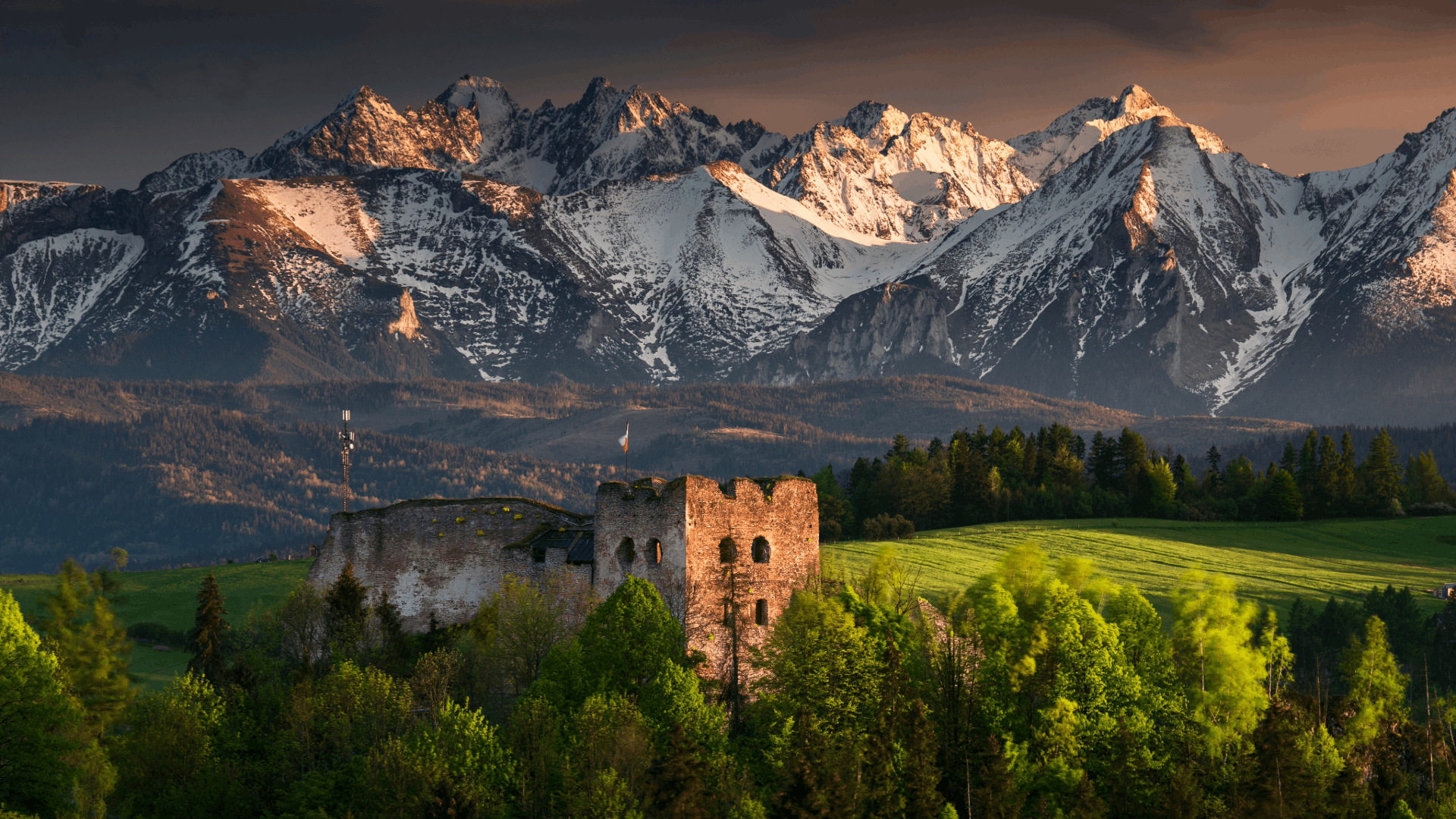



Panoramic Peaks: The Best Tatra Mountain Viewpoints Accessible Without a Long Hike

Hello Cracow • June 8, 2026

The Tatra Mountains, forming the striking natural border between Poland and Slovakia, are well known for their dramatic alpine landscapes, jagged peaks, and steep, demanding trails. While they are a paradise for experienced hikers and mountaineers, you don’t need to commit to an exhausting multi-hour trek to truly appreciate their beauty. Many visitors coming to the region are simply looking to take in the views in a more relaxed way, without the physical strain of long or technical hikes. Whether you’re traveling with family, planning a slow-paced holiday, or just prefer gentle sightseeing over challenging ascents, the Tatras still offer plenty of opportunities to experience their grandeur.


In fact, the area is dotted with easily accessible viewpoints and scenic spots that deliver an impressive visual payoff with very little effort. From panoramic valleys to sweeping mountain backdrops, you can enjoy the essence of the Tatras at a comfortable pace, letting the landscape speak for itself without rushing or pushing your limits.
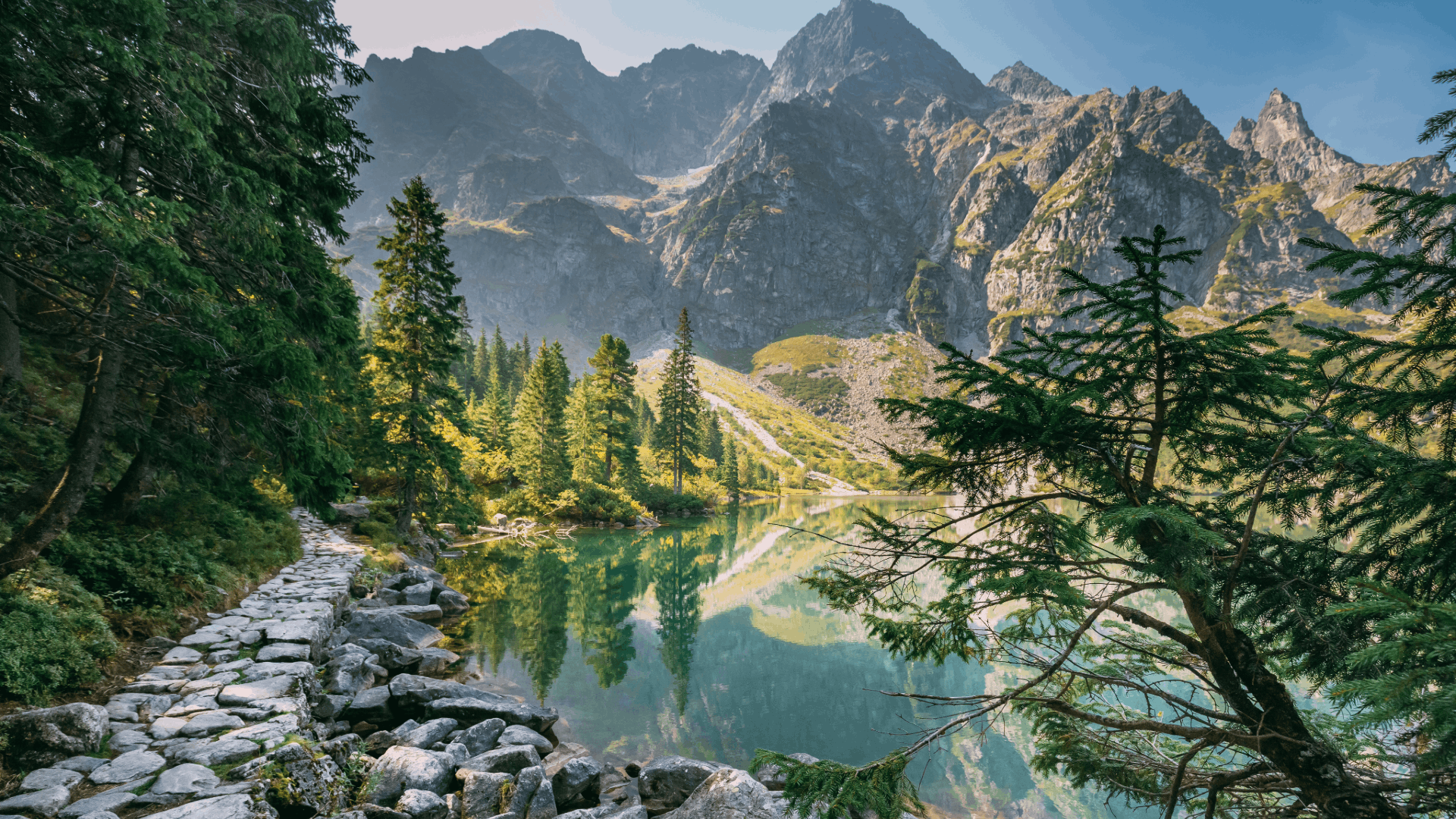
Which Tatra peaks can you spot?

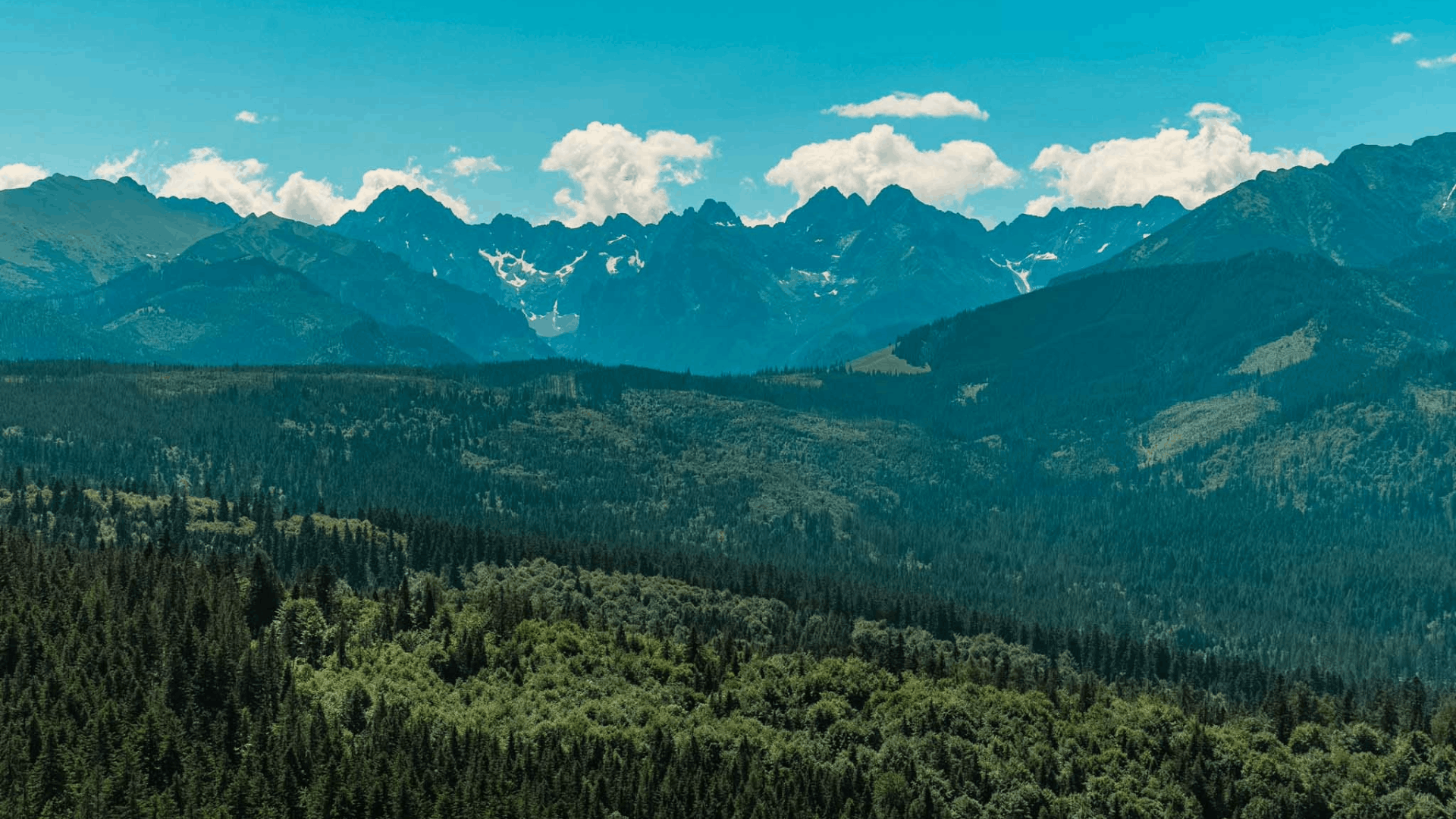
Looking across the Tatra skyline, you’re essentially seeing a vast natural border made of limestone and granite, separating the High Tatras, the Western Tatras, and the Belianske Tatras. From the main viewpoints around the region, the panorama is wide enough that you can actually pick out several of the most iconic summits — each with its own distinct shape and character.


Among the most recognizable peaks is Rysy (2,499 m/8,199 ft), the highest point in Poland, often identified by its sharp, jagged outline that stands out clearly against the horizon. On the Slovak side rises Gerlach (2,655 m/8,711 ft), the tallest peak in the entire Tatra range, dominating the skyline with its massive, rugged presence.

Closer to the famous Morskie Oko lake, you’ll notice the dramatic wall of the Mieguszowieckie Szczyty, a cluster of towering peaks that form one of the most impressive mountain amphitheaters in the Tatras. Further along stretches Wołoszyn, a long, undulating ridge that looks almost wild and untouched, especially in softer evening light.


In the Belianske Tatras, the scenery becomes more distinctive and sculpted. Muran (1,890 m/6,201 ft) stands out with its flatter, plateau-like top, while Hawran (2,152 m/7,060 ft) rises as the highest and one of the most recognizable peaks in that subrange. Nearby, Placzliwa Skala (2,142 m/7,028 ft) forms a striking twin structure next to Hawran, giving the ridge a sharp, almost dramatic profile.
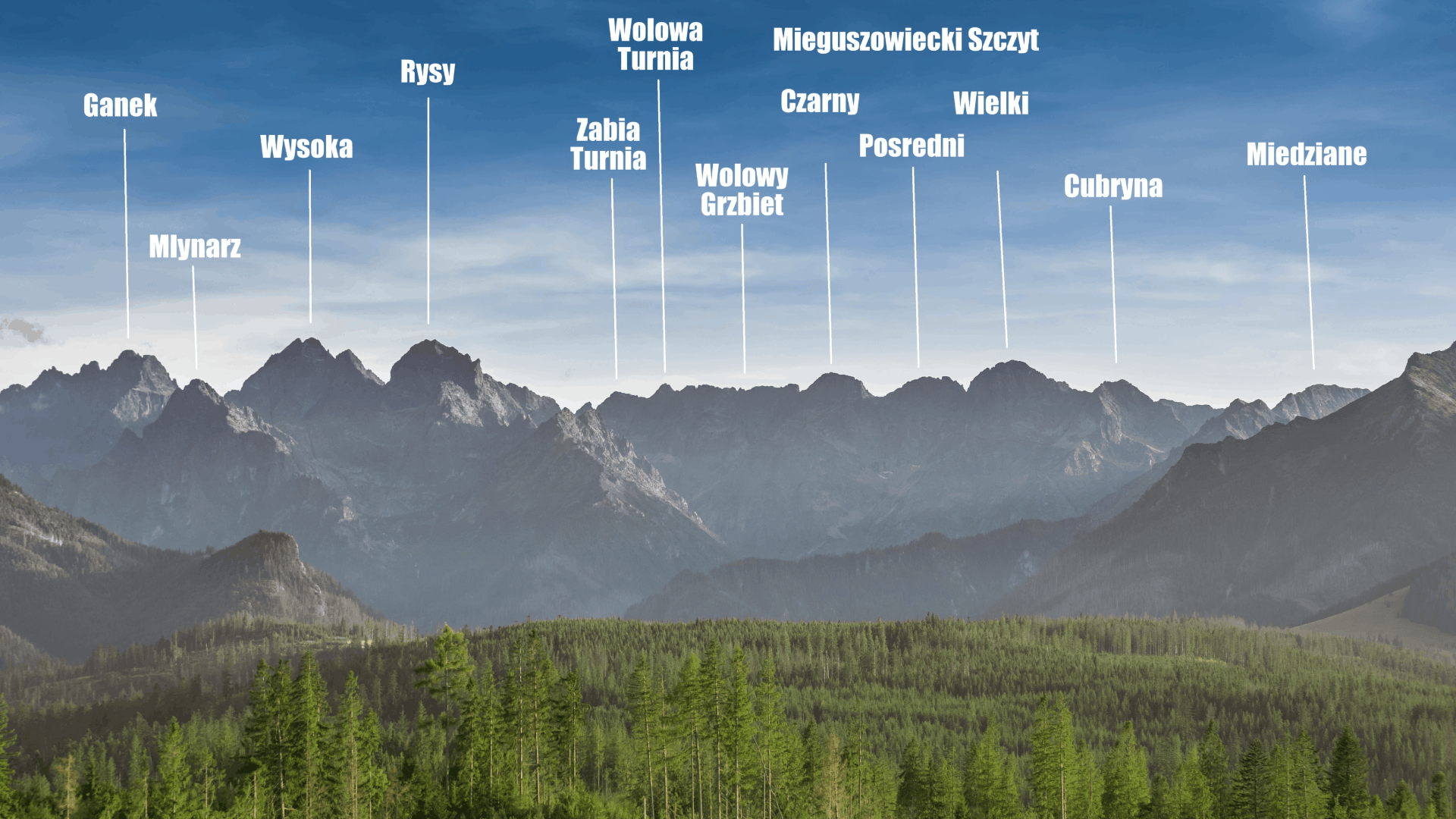
How to view the Tatra panorama from Gubalowka hill?

Just north of Zakopane, Gubalowka Hill (1,126 m/3,694 ft) offers one of the most accessible and widely photographed viewpoints in southern Poland. Its position directly opposite the main Tatra ridge means you get a full, open panorama of the entire mountain chain—on clear days, the view stretches from the Western Tatras all the way to the High Tatras. From here, one of the most recognizable features is the silhouette of Mount Giewont, often described as a “sleeping knight”, which becomes especially striking at sunrise or late afternoon when the light softens the ridgelines.

Gubalowka is often recommended as an ideal starting point for exploring the region. There’s no hiking required, which makes it especially convenient for families, older visitors, or anyone who simply wants to enjoy the mountains without a demanding climb.

How to Get to the Top of Gubalowka?

Reaching the summit is quick and straightforward thanks to the Gubalowka funicular railway, which takes only about 3.5 minutes from central Zakopane. It’s a smooth ride that immediately lifts you above the town into wide, open mountain views. For those who prefer a more structured experience, it’s also easy to join a guided excursion, which combines the Gubalowka viewpoint with a walk through Zakopane’s traditional wooden architecture and a tasting of local cheeses oscypek.
BOOK TOUR

Where can you find the best drive-up panoramas?

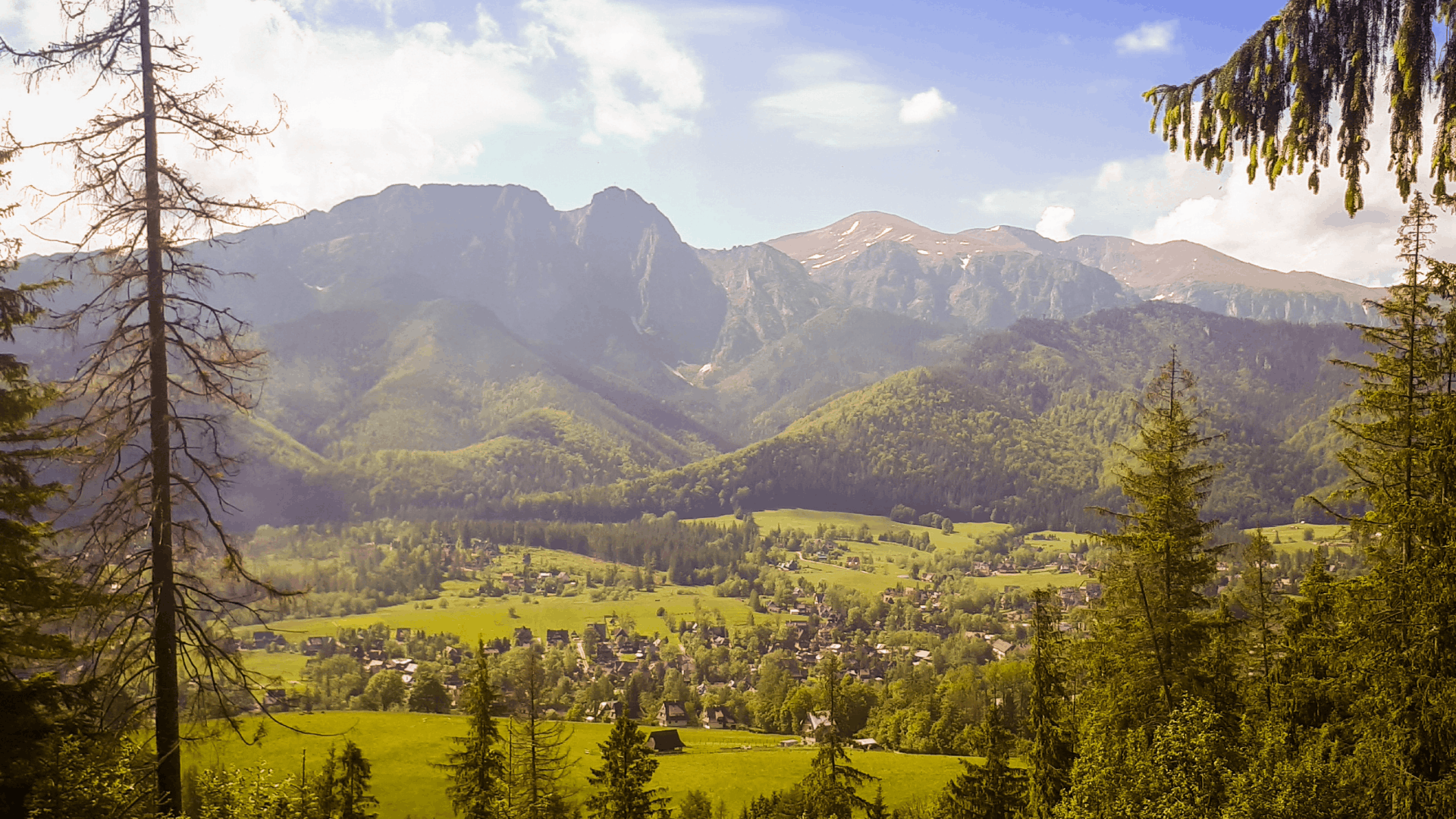
If you’re looking for some of the most impressive Tatra views without the effort of hiking, heading east of Zakopane is a great choice. Around the small village of Brzegi, the landscape opens up dramatically, offering wide, uninterrupted sightlines toward the mountains. In particular, the areas around Wierch Brzegowski and the nearby Polana Glodowka clearing are known for delivering some of the most expansive panoramas in this part of Poland.

From these elevated meadows, the view naturally divides into three distinct mountain groups. In the High Tatras, you can clearly spot Rysy, the highest peak in Poland, alongside Gerlach, the tallest in the entire range. The massive rock wall formed by the Mieguszowieckie Szczyty dominates the skyline above Morskie Oko, while the long ridge of Woloszyn stretches across the landscape like a natural boundary between valleys. Shifting your gaze slightly, you see the scenery soften into the Belianske Tatras, where Muran stands out with its flat, table-like summit. Meanwhile, the more rugged limestone formations of Hawran and Placzliwa Skala create a sharp, contrasting profile that looks almost sculpted compared to the more jagged High Tatras.


How to walk among the clouds at the sky walk "Serce Poronina"?

For a completely different kind of mountain experience, the Sky Walk “Serce Poronina” in Polana Zgorzelisko offers a modern and immersive way to enjoy the Tatra landscape. Instead of looking up at the mountains from below, here you gradually rise into the forest canopy itself. The structure combines a gently ascending wooden walkway with a 47-meter observation tower (154 ft). The full path stretches for 854 meters (2,800 ft), winding through the pine forest and gradually revealing wider and wider views of the surrounding peaks. At the top, a spacious 75-square-meter glass viewing platform opens up a completely unobstructed 360-degree panorama. The design is intentionally accessible, with a maximum incline of just 6°, making it suitable for families with strollers and visitors with limited mobility.

How to enjoy the best view and relax afterward?

Rather than organizing transport and tickets separately, many visitors choose organized experiences that combine several attractions into one day. A popular option is our recently introduced tour, which brings all of these experiences together in one seamless day trip. The itinerary combines adrenaline-filled quad biking through the forests of Bukowina Tatrzanska, a visit to the sky walk, and a relaxing unwind at the Bania Thermal Baths at the end of the day. To make the experience even more accessible, you can now use the promo code RIDE15 to get 15% off the tour.
BOOK TOUR

What are the best easy trails to explore on your own?

Not every unforgettable view in the Tatras requires a guide or a demanding climb. If you prefer to move at your own rhythm, there are plenty of gentle, clearly marked routes that let you enjoy the mountains without technical difficulty or heavy effort—just simple walking and constant scenery.


Morskie Oko: Poland’s most famous alpine lake

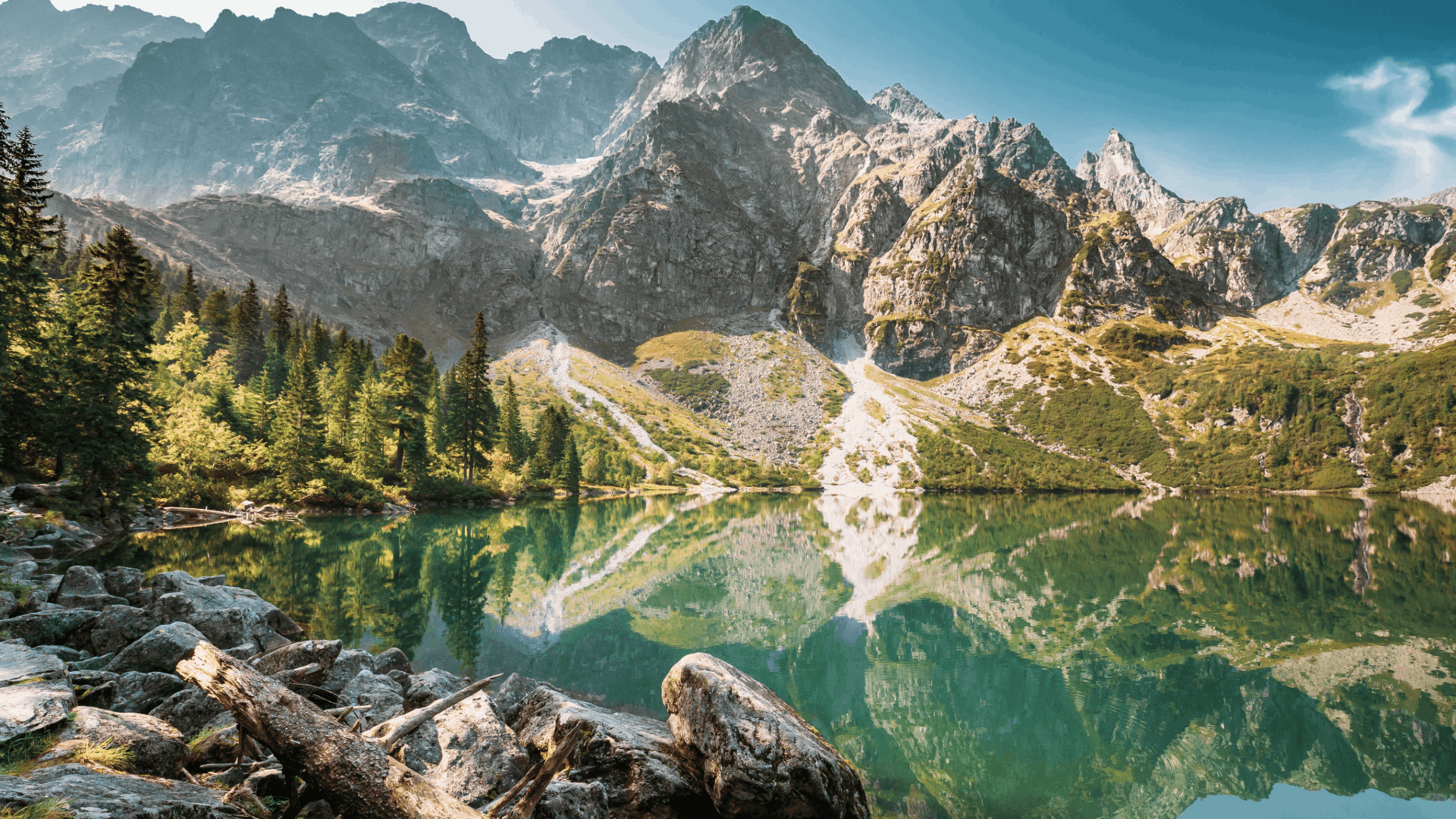
Morskie Oko (“Eye of the Sea”) is the largest and arguably most iconic lake in the Polish Tatras. The trail leading to it is also one of the most beginner-friendly mountain walks in the entire region, making it a must for first-time visitors. The route begins at the Palenica Bialczanska car park, near the former border area of Lysa Polana, and follows a wide, fully paved mountain road. The trail itself has around 8 km (5 miles) each way, with a steady but very manageable incline. And the reward? A dramatic alpine lake framed by cliffs, with the peaks of Rysy and the Mieguszowieckie Szczyty reflected in the deep, still water.

Chocholowska Valley: The gentle giant

Dolina Chocholowska is the longest valley in the Polish Tatras and one of the most relaxed, scenic walks in the entire mountain range. The route follows a wide, gently rising gravel path that runs alongside a mountain stream, making it feel more like a long nature stroll than a mountain hike. The trail is roughly 9 km (5.6 miles) to the mountain hut, with minimal elevation gain. Bicycle rentals are available at the entrance, and during peak season, a tourist tractor-train can take you part of the way. The best part? A spacious alpine clearing with a traditional wooden chapel and the Chocholowska mountain hut, surrounded by mountain scenery. In early spring, the valley is especially famous for its fields of blooming crocuses, which transform the landscape into a sea of purple

Hala Gasienicowa & Murowaniec Hut: A taste of true alpine scenery

For those who want something slightly more engaging but still very accessible, Hala Gasienicowa offers one of the most rewarding easy-to-moderate hikes in the Tatras. The route starts from Kuznice in Zakopane, following a well-maintained stone path that gradually climbs into higher alpine terrain. The trail is quite easy, about 2 hours of steady uphill walking on a clearly marked, non-technical route. And at the end? A dramatic alpine basin surrounded by peaks, opening into one of the most scenic natural amphitheatres in the Tatras. The best reward is a piece of an apple pie at the Murowaniec mountain hut, a popular stop known for its hearty Polish cuisine — an ideal place to rest before heading back down.
Quick-look comparison of the best easy-access viewpoints

Viewpoint/trail Main peak visible Elevation (m) How to get there Difficulty Recommended Hello Cracow tour
Gubalowka Hill Full Tatra ridge, Giewon silhouette 1126 Funicular from Zakopane center (3 min ride) Easy Zakopane Town in Tatra Mountains Excursion from Krakow
Polana Glodowka/Wierch Brzegowski Rysy, Gerlach, Mieguszowieckie Szczyty, Woloszyn, Muran, Hawran, Placzliwa Skala 1138 Scenic drive via Oswald Balzer Road, roadside pull-offs Easy Tatra Mountains Adventure: Quads, Skywalk & Thermal Baths
Sky walk "Serce Poronina" Panoramic view of the entire Tatra arc 1160 Guided tour with transport from Krakow Easy Tatra Mountains Adventure: Quads, Skywalk & Thermal Baths
Morskie Oko Rysy, Mieguszowieckie Szczyty, Woloszyn 1395 Palenica Bialczanska car park Easy Self-guided
Chocholowska valley Wide alpine meadows, distant peaks 1150 Drive to valley entrance, then flat trail Very easy Self-guided
Hala Gasienicowa/Murowaniec hut High Tatra amphitheatre of peaks 1500 Cable car to Kuznice + 2h walk Moderate Self-guided

Ready to experience the Tatras without the strain?

Whether you’re travelling with family, friends, or simply prefer a slower pace, there are plenty of ways to enjoy the Tatra Mountains without long or demanding hikes. You can join one of our curated tours or explore the self-guided routes above and build your own perfect mountain day. Let the Tatras surprise you — no strenuous trekking required, just incredible views and fresh mountain air.
BOOK TOUR
By Hello Cracow • October 18, 2026
Krakow in November is a city of earlier evenings. At four o'clock, the lamps are already on around Planty Park. The windows of cafes begin to glow, the Vistula is usually wrapped in mist, and a walk that felt straightforward at lunchtime suddenly calls for a warm table somewhere nearby. That can sound like a reason to wait for spring. In practice, it gives a short stay in Krakow a different rhythm. You do not try to spend twelve hours outdoors. You walk while there is light, choose one place worth lingering in, then let the evening belong to music, film, food or a museum that would have been too easy to skip in July.
By Hello Cracow • October 6, 2026
There is a particular kind of Krakow trip that starts badly for a very ordinary reason. You arrive on Friday afternoon, leave your suitcase at the hotel, and open your phone to book Auschwitz for Sunday. The English tours are gone. Schindler's Factory has no tickets until Tuesday. The restaurant you saved on Instagram is fully booked. None of these problems will ruin the weekend, but suddenly the itinerary is being decided by whatever happens to be left. A little planning avoids that without turning a city break into a spreadsheet. Krakow still leaves plenty of room for long walks, unexpected cafes and evenings that continue because you like the neighbourhood. The important thing is knowing which experiences depend on a specific time, guide, language or number of available places. Think of your reservations as the frame around the trip, not the trip itself.
By Hello Cracow • October 5, 2026
Autumn in Krakow often begins quietly. In September, you can still sit outside with a coffee near Main Market Square, walk through Planty Park in a light jacket and feel almost no urgency to leave the city before sunset. A few weeks later, the same streets look completely different. The chestnut trees drop their leaves, the light becomes softer, and an October morning that begins with clear skies can end with cold rain over Wawel Hill.  That change is exactly why Krakow is so rewarding in autumn. The city feels less hurried, cafes become part of the itinerary rather than a quick stop between attractions, and a warm dinner in Kazimierz feels deserved after a day on foot. Packing well means you can enjoy all of it without cutting a walk short because your shoes are wet or your jacket is still back at the hotel. The key is not packing for cold weather alone. It is packing for several versions of the same day.
By Hello Cracow • September 28, 2026
Arriving in Krakow is usually straightforward, but the first hour can shape the whole trip. A late flight, heavy suitcase or unfamiliar ticket machine can quickly make a simple transfer feel more complicated than it needs to be. The good news is that Krakow is well connected by air and rail, and its main airport sits close enough to the city centre that getting to your hotel is usually fairly simple.  For most visitors, the choice comes down to Krakow Airport, the main railway station at Krakow Glowny, or a private transfer booked in advance. Each option works slightly differently, depending on what time you arrive, where you are staying and how much luggage you have. Public transport is often enough, but there are situations when paying for a direct transfer can make the first part of your trip much easier.
By Hello Cracow • September 23, 2026
October is a great month to visit Krakow if you want to see the city without the summer crowds. The weather is usually still good enough for long walks, while cooler evenings make it easier to combine time outdoors with museums, restaurants and cafés. Planty Park starts to turn gold, the Old Town is less crowded, and Kazimierz is a good place to spend an afternoon without rushing from one sight to another. There is also plenty happening around the city. October brings concerts, film screenings, literary events, food festivals and other seasonal events, so it is worth checking what is on during your visit. You can easily combine one of these with the main sights, a walk along the Vistula or an evening in one of Krakow's neighbourhoods. It is also a good time to plan a day outside the city. Wieliczka, Auschwitz-Birkenau and Zakopane are all popular options, while the Tatra Mountains can be particularly appealing in autumn. Just keep an eye on the weather, as conditions outside Krakow can be quite different.  If you are planning a trip for October, you do not need to fill every day in advance. Pick a few things you definitely want to see, check the events happening during your dates and leave some time for whatever you find along the way.
By Hello Cracow • September 15, 2026
Krakow is a city best explored on foot. A typical day can move from cobbled streets around the Old Town to the open riverside paths near Wawel, then on to Kazimierz or Podgorze, often with more walking than visitors expect. Even a simple plan can quickly turn into several hours outside, especially when you add a museum, a market, a café stop or one of the city’s many viewpoints. The right packing list starts with comfortable shoes, flexible layers and one piece of rain protection that fits in your day bag. Krakow weather changes quickly across the year, and sometimes within a single day. Spring can bring mild afternoons and sudden showers, while summer days can be warm enough for long walks but cooler once the sun goes down. Autumn tends to bring shorter days and more changeable conditions, while winter can mean cold temperatures, snow or wet streets. These differences matter when most of your day is spent moving between outdoor sights. The temperature ranges below are typical average lows and highs for Krakow-Balice, not a forecast for a particular trip. Conditions in the city centre can feel slightly different, especially on sunny days or when the wind picks up along the Vistula. Check the forecast again shortly before you travel, then pack for walking rather than for one perfect weather scenario. If you are planning trips outside Krakow, leave some room for further changes. Wieliczka is underground and noticeably cooler than the streets above, while a day in the Tatra Mountains can bring very different conditions from those in the city. A few simple choices can make it much easier to stay comfortable when your plans take you from one part of the region to another.
By Hello Cracow • September 7, 2026
A visit to Auschwitz-Birkenau asks for more than simply adding another day trip to your Krakow itinerary. The former German Nazi concentration and extermination camp is a memorial site and a place of mass murder, where the scale of what happened can be difficult to understand through buildings, photographs and numbers alone. Reading before you go cannot prepare you for the visit itself, and it should not try to. What it can do is give some of the history a human dimension. Names, individual stories, memories and difficult choices become easier to recognise when you arrive at the site. Instead of knowing only what happened, you begin to understand something about the people who experienced it. The six writers below approach this history from very different perspectives. Four of them experienced Auschwitz as prisoners, writing about the camp from their own memories and experiences. Zofia Nalkowska encountered its aftermath from a different position, collecting testimonies and evidence about what had happened there in the months following the war. Hanna Krall offers yet another perspective. She survived the Holocaust as a child but was never imprisoned at Auschwitz. Her writing instead brings readers closer to the Jewish world destroyed during the Holocaust and to the people who carried its memory into the years that followed. There is no single book that can explain Auschwitz. Taken together, however, these works can help you arrive with more context and a greater awareness of the human stories behind the place.
By Hello Cracow • August 30, 2026
When the Main Market Square starts to feel a little too busy, you don't have to leave Krakow to find a different side of the city. Just beyond the usual sightseeing route, you'll find former quarries turned into green spaces, riverside paths, hilltop viewpoints, monastery gardens and neighbourhoods where life moves at a much slower pace. There is nothing wrong with spending your first day around Rynek Glowny, St Mary's Basilica, Wawel Castle and the Royal Route. They are famous for a reason, and for a first visit, they belong on the list. But after a few hours of following tour groups, waiting for a table and navigating busy streets, you may start looking for somewhere with a little more breathing room. That's when Krakow gets interesting. You don't need a complicated day trip or a long journey out of the city. Sometimes, a 15-minute tram ride or a short walk is enough to change the atmosphere completely. Suddenly there are more trees than souvenir shops, locals walking their dogs instead of organised groups, and paths where you can simply keep walking without having to stop every few metres. And these places aren't abandoned corners of the city. Krakow residents use them every day, particularly at weekends. You'll see people jogging, cycling, meeting friends, taking their children out or simply sitting somewhere with a coffee and enjoying the afternoon. So, if you're ready to put the guidebook down for a few hours, we've collected some of the best places to experience a quieter, greener and more local side of Krakow - all without straying too far from the city itself.
By Hello Cracow • August 30, 2026
Leave Krakow’s cobblestone streets behind and head south towards a completely different Poland. Beyond the city, the landscape opens into forests, meadows and mountain villages, with the Tatra peaks rising in the distance. A quad tour through Podhale gives you a chance to experience this landscape from the tracks rather than from a coach window.  The ride is the obvious highlight, but it is the journey that makes the day special. You move through quiet countryside, forest trails and highland landscapes, stopping along the way to take in the views and experience a slower side of southern Poland. Add a bonfire, local food or a soak in the thermal baths, depending on the tour, and a few hours outside Krakow can quickly turn into one of the most memorable days of your trip.
By Hello Cracow • August 17, 2026
September is when Krakow begins to soften into autumn. The warmest days still belong to the Vistula boulevards and café terraces, but Planty Park starts to change colour, and the city’s calendar becomes more local, varied and atmospheric. For first-time visitors, Krakow can seem centred entirely on the Main Market Square, Wawel Castle and Kazimierz. September is a good month to look beyond that first impression. A single weekend can bring music from Ireland and Scotland to a Renaissance manor house, local beekeepers to a historic Kazimierz square, and hundreds of dachshunds onto the Old Town’s most famous street. The city feels less like a checklist destination and more like a place where residents have their own rituals, neighbourhoods and reasons to gather. So, what is actually happening in Krakow this September? From the biggest cultural events to the smaller local traditions worth knowing about, here’s your guide to experiencing the city beyond the usual tourist highlights.
More Posts